
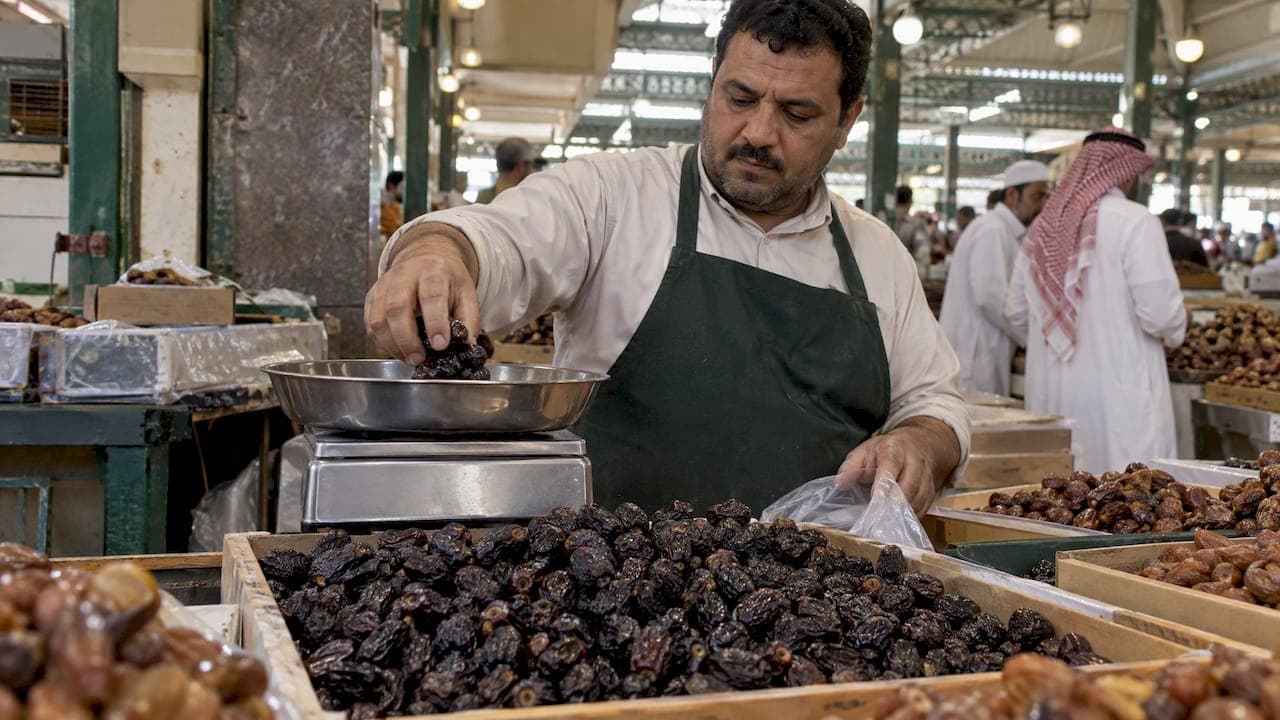
The main stops for dates in Medina are the Madinah Central Dates Market in the Food City area and the New Dates Wholesale Market near Al Hadiqah, both a short ride from Masjid an-Nabawi. Ajwa is the variety to look for, with retail prices commonly running 100 to 150 SAR per kilogram and premium grades reaching 250 SAR. Harvest season from June through August brings the freshest stock and often the better prices.
TL;DR:
- Food City suits retail shoppers seeking organized stalls and smaller packs; Al Hadiqah wholesale stalls charge less per kilogram but usually require larger purchases.
- Standard Ajwa costs 100 to 150 SAR per kilogram, while premium grades reach 180 to 250 SAR; mixed grades can fall to 80 to 100 SAR.
- June through August brings fresh stock and softer prices, but weekday visits after Fajr are quieter than weekends or peak Ramadan and Hajj periods.
- Before buying, sample Ajwa, check for moist, pliable dates, and confirm the grade and Medina origin; compare two or three stalls.
Table of Contents
- Where the markets are and when to go
- Which date varieties to look for and what they cost
- How wholesale stalls differ from retail shops
- Getting to the market from your hotel or the Haram
- How the Medina date market maintains hygiene and quality
- Storing your dates to keep them fresh after you leave
- Finding reliable sellers within the market
- What payment methods work at the market
- Why dates matter so much to Medina's identity
- What shapes how pilgrims actually shop here
- Getting to and from the date market without the guesswork
- FAQ
- Sources
Where the markets are and when to go
The New Central Dates Market sits inside the Food City development at a major road intersection, a modern complex built to replace older scattered stalls with organized rows of vendors. Most shops run long hours through the day, with Friday schedules shifting later to accommodate prayer times. A second cluster, the New Dates Wholesale Market in the Al Hadiqah area, caters more to bulk buyers and traders working directly with farm suppliers. Smaller specialist shops line the streets on the northern and western sides of Masjid an-Nabawi, within walking distance for anyone staying near the Haram.
Crowds build fast during Ramadan, Hajj, and the June to August harvest window, so timing matters.
- Early morning after Fajr tends to be quieter, with fresher trays set out for the day.
- Mid-afternoon, outside the main prayer windows, works well if mornings are already booked.
- Weekday visits generally beat weekends for browsing without a crowd.
- Friday hours run shorter, so plan around midday prayer if that is your only option.
Which date varieties to look for and what they cost
Ajwa is Medina's signature date: soft, dark, and slightly bitter-sweet, often described as having a dense, almost raisin-like texture. Sukkari is lighter in color and notably sweet, a favorite for snacking straight from the box. Safawi looks similar to Ajwa but is firmer and less expensive, a common substitute when Ajwa supply tightens. Medjool is large, caramel-soft, and widely recognized outside Saudi Arabia, making it a familiar choice for first-time buyers. Sagai is golden-brown with a lighter, crisper bite, while Khudri is drier and firmer, often used in cooking rather than eaten fresh.
- Ajwa: dense, dark, mildly bitter-sweet, the variety most associated with Medina.
- Sukkari: pale, very sweet, soft texture, popular as a standalone snack.
- Safawi: firm, dark, a budget-friendly alternative to Ajwa.
- Medjool: large, caramel-like, widely known internationally.
- Sagai: golden, lighter bite, moderate sweetness.
- Khudri: firmer and drier, often used in cooking or baking.
As of 2026, standard retail Ajwa in Medina runs 100 to 150 SAR per kilogram, with premium Mumtaz or Aliyah grades reaching 180 to 250 SAR. Mixed or standard grades sell for less, often around 80 to 100 SAR per kilogram, and prices tend to soften during harvest months when supply is heaviest. Packaging adds to the price too: a plain open tray costs less than a sealed gift box, and vacuum-sealed packs aimed at travelers usually carry a premium for the extra handling. Most shops sell in 500-gram, 1-kilogram, and multi-kilogram gift sizes, which makes comparing per-kilogram prices across vendors worthwhile before committing to a box.
How wholesale stalls differ from retail shops
Wholesale stalls, concentrated in the Al Hadiqah market, deal in large lots and often work directly with farm representatives rather than individual shoppers. Prices per kilogram run lower there, but minimum purchase quantities are usually higher, which suits travelers buying for a large family or group rather than a single gift box. Retail shops near the Haram and inside Food City tend to have fixed shelf prices, cleaner packaging, and smaller pack sizes built for individual buyers.
- Ask to taste a sample before buying, especially for Ajwa, since quality varies even within the same stall.
- Check for uniform color and a slightly moist, pliable texture rather than dry or overly sticky dates.
- Ask the seller to name the grade, such as Mumtaz or Aliyah, so you can compare it against other stalls.
- Confirm the dates are grown in the Medina region if Ajwa origin matters to you.
- Compare prices at two or three stalls before settling on one, since per-kilogram rates can shift noticeably between vendors.
Bargaining is common practice at traditional stalls, so a polite offer slightly below the asking price is normal and expected. Fixed-price shops inside newer complexes are less open to negotiation, which can suit buyers who prefer a quick, straightforward transaction over back-and-forth haggling.
Pro Tip: Buy a small sample bag first if you are unsure about a stall's quality, then return for a larger purchase once you know the dates meet your expectations.
Getting to the market from your hotel or the Haram
Shoppers staying close to Masjid an-Nabawi can walk to the street-level shops on the northern and western sides of the mosque in a matter of minutes. Reaching Food City or the Al Hadiqah wholesale market requires a short taxi ride or a prebooked transfer, since both sit farther from the central mosque area.
- Taxis are available near most hotel entrances, though wait times and fares can vary by time of day.
- Prebooked transfers remove the guesswork around pickup points and fares, which matters most for visitors unfamiliar with the city.
- Gate pickup details and driver information sent ahead of time help first-time visitors avoid confusion at busy entrances.
- Return trips with bulky purchases, like multiple boxes of dates, are easier with a vehicle booked in advance rather than hailing one on the spot.
For visitors coordinating a market trip around prayer times or a broader city visit, our guide to tracked transfers and arrival logistics in Medina covers the practical side of getting around reliably. Those comparing costs across options may also find our breakdown of Madinah taxi price benchmarks useful before deciding between a street taxi and a prebooked ride.
How the Medina date market maintains hygiene and quality
Vendors operating inside Food City and the newer wholesale complex work under organized stalls rather than open-air setups, part of a broader push by local authorities to modernize the dates sector and standardize how it markets and handles product. That shift has meant covered display areas, consistent stall layouts, and clearer separation between storage and sales space compared with older, scattered souq arrangements. Shoppers can expect dates displayed on clean trays rather than loose piles on the ground, with sealed packaging options available for anyone concerned about handling during transport.
Grade labeling, where sellers use terms like Mumtaz or Aliyah, also functions as a quality marker, since higher grades typically reflect stricter sorting for size, moisture, and appearance. Buyers who want extra assurance can ask vendors directly about the origin and grade of a batch before purchasing, a routine question at most stalls.
Storing your dates to keep them fresh after you leave
Dates bought loose from a tray keep best in an airtight container kept in a cool, dry spot, away from direct sunlight. For travel, vacuum-sealed or tightly boxed packages hold up far better in luggage than open trays, which can soften or stick together during a long flight home. If you plan to eat your purchase within a week or two, room temperature storage in a sealed container works fine for most varieties.

For longer storage, refrigeration slows moisture loss and helps dates like Ajwa and Sukkari keep their texture for weeks rather than days. Freezing works too for buyers bringing dates home as gifts over a longer trip, since dates thaw well without much change in taste or texture. Either way, keeping air and moisture out matters more than the exact temperature, which is why sealed packaging from the market is worth paying a little extra for if you are traveling far.
Finding reliable sellers within the market
Street-level shops near the northern and western sides of Masjid an-Nabawi tend to offer the widest selection and the chance to taste before buying, an advantage over the packaged convenience of supermarkets and malls. Vendors who let you sample freely and answer questions about grade and origin without hesitation are generally a good sign, since confidence in the product usually shows in how openly a seller talks about it.
Inside Food City and the newer wholesale market, the more organized stall format makes it easier to compare multiple sellers side by side before committing to one. Asking other shoppers or hotel staff for a specific stall recommendation can also help, since word of mouth carries weight in a market where many vendors have operated for years. A seller willing to offer a small discount on a repeat visit or a slightly larger purchase is often one worth returning to.
What payment methods work at the market
Cash remains the most widely accepted payment method across both traditional stalls and newer market complexes, particularly for smaller purchases or quick bargaining exchanges. Many shops inside Food City and other organized retail spaces also accept card payments, a reflection of the broader modernization of the dates sector in Medina. Mobile payment options are becoming more common in the newer, fixed-price shops, though smaller independent stalls may still prefer cash.

Carrying a mix of small cash denominations makes bargaining smoother, since negotiating a price only to pay with a large bill can slow things down. If a card or mobile payment matters to you, it is worth confirming with the vendor before settling on a price, especially at smaller stalls where card readers are less consistent.
Why dates matter so much to Medina's identity
Dates hold a central place in Medina's religious and cultural life, tied closely to the city's history and its connection to the Prophet's Mosque. Ajwa in particular carries significance beyond taste, with many visitors seeking it out specifically because of its association with Medina rather than simply as a snack. During Ramadan, dates are the traditional food for breaking the fast, and demand across the market rises sharply as residents and visitors alike stock up for iftar.
The Hajj season also drives heavy market activity, with large volumes moving through the Central Dates Market as pilgrims buy dates both to eat during their stay and to carry home as gifts. For many visitors, bringing back Ajwa from Medina is as much a part of the pilgrimage as the visit itself, a way of carrying a piece of the city's significance home to family and friends.
What shapes how pilgrims actually shop here
Most pilgrims time their market visit around prayer windows rather than the clock, slipping in a quick stop before Dhuhr or after Isha when the crowds thin out. Purchase sizes tend to run small and practical: a kilogram or two of Ajwa in a sealed pack, easy to carry and built to survive the trip home. Buying in Medina itself, rather than waiting for another city, tends to work out better on price given the city's position as a production center.
— Fa
Getting to and from the date market without the guesswork
Booking a ride ahead of a market trip means knowing who is picking you up and when, rather than negotiating with a stranger outside the Haram with bags of dates in hand. You can arrange point-to-point transfers to get from your hotel to Food City or the wholesale market and back, along with hourly hire options for combining a market stop with other errands.
- Point-to-point transfers between your hotel, the Haram, and the date markets.
- Hourly hire for shopping trips that combine multiple stops.
- Ziarah packages that can be timed around a market visit.
- Driver photos, vehicle details, and real-time tracking may be provided before trips.
Bookings typically include a vehicle and driver, with details provided in advance to help ensure a smooth pickup. Visit our services page to check availability and arrange your transfer before heading out to buy your dates.
FAQ
Where is the best place to buy dates in Madinah?
The Madinah Central Dates Market inside Food City is the main-organized option, alongside the New Dates Wholesale Market for bulk buyers. Street-level shops near Masjid an-Nabawi offer a smaller but convenient alternative for travelers staying close to the Haram.
How much does 1 kilogram of Ajwa dates cost?
Standard retail Ajwa typically runs 100 to 150 SAR per kilogram, with premium grades reaching 180 to 250 SAR. Mixed or standard grades can be found for 80 to 100 SAR, especially during harvest season from June to August.
Which market in Madinah is best for shopping?
The Central Dates Market in Food City suits retail buyers looking for variety and organized stalls, while the New Dates Wholesale Market fits bulk purchases at lower per-kilogram rates. Street shops near the Haram work well for travelers who want convenience and the chance to taste before buying.
How much is 1 kilogram of Ajwa dates in Saudi Arabia?
Prices vary by city and grade, but in Medina, standard retail Ajwa generally falls between 100 and 150 SAR per kilogram. Premium grades can reach 250 SAR, and Medina's position as a production center often means better pricing than other Saudi cities.
When is the best time to visit the date market for fresher stock?
The harvest season from June through August brings the widest selection of fresh varieties and often lower prices due to increased supply. Visiting outside Ramadan and Hajj peak periods also means fewer crowds while shopping.
Sources
- Visit The New Central Dates Market
- Ajwa Dates Price In Saudi Arabia 2026 – Complete City-Wise Guide
- Harvest Season Brings Bustle to Madinah's Central Date Market