
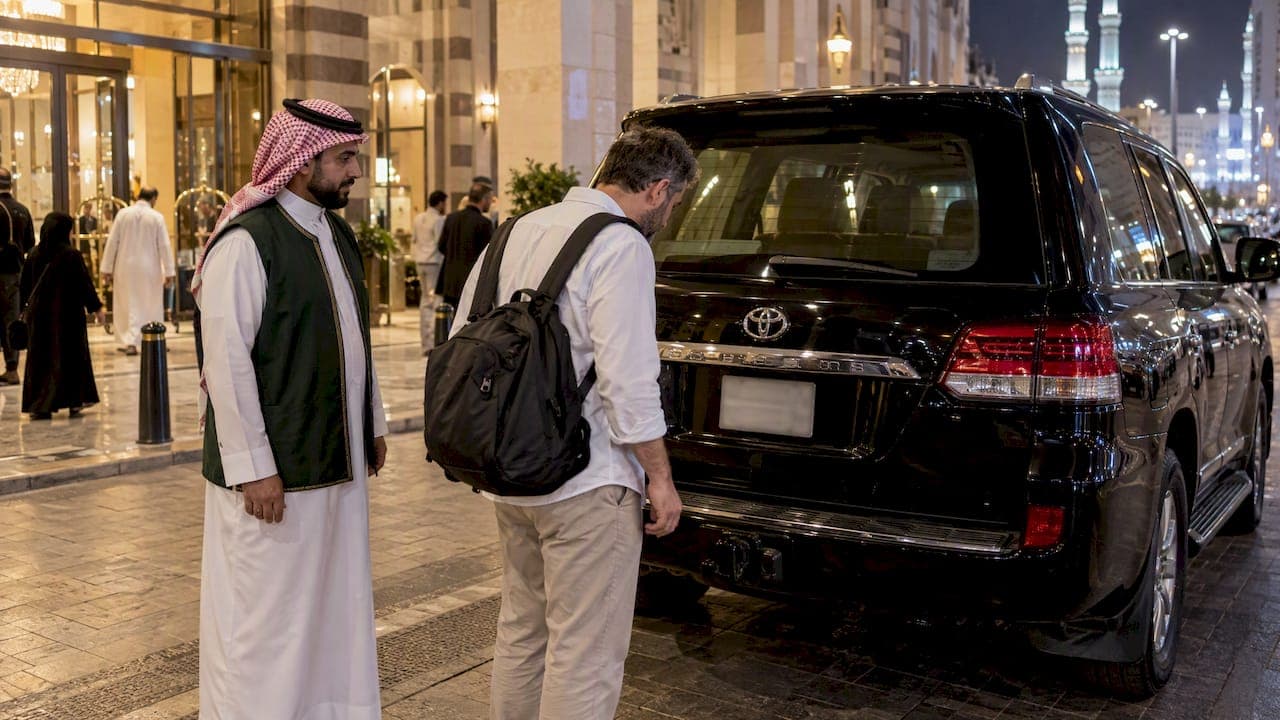
The most reliable way to move inside Medina depends on the trip. Madinah Bus covers routine, low-cost travel across the city. Ride-hailing apps and taxis handle door-to-door trips, including hotel-to-Haram runs. Haramain Railway and SAPTCO cover journeys to Mecca, Jeddah, or the airport. Fares stay low across the board, and official apps and cards make payment simple for most riders.
TL;DR:
- The Madinah Bus offers low-cost, regular city routes with fares around 3.45 SAR, and daily, weekly, or monthly passes can reduce daily expenses.
- Intercity travel to Mecca or Jeddah is most efficiently managed via SAPTCO buses or the Haramain High-Speed Railway, especially during peak seasons like Ramadan and Hajj.
- Using ride-hailing apps or taxis provides door-to-door service but requires pre-booking during busy periods, and street taxis without meters involve fare negotiations.
- Walking is often fastest within central Medina near the Haram, with hotel shuttles and golf carts serving short distances during congestion hours.
- Preparing apps, contactless payment methods, and backup plans beforehand ensures smoother travel while avoiding delays caused by traffic, prayer times, or seasonal crowds.
Table of Contents
- Overview of transport options in Medina
- Madinah Bus: routes, hours, fares, and how to pay
- Intercity travel: SAPTCO buses and the Haramain Railway
- Taxis and ride-hailing apps: fares and safety tips
- Walking, hotel shuttles, and golf carts near the Haram
- Day-of checklist: apps, payments, and backup plans
- Planning around prayer times and pilgrim seasons
- Bike rental and shared bike services in Medina
- Parking for private vehicles in the city
- Handling language barriers on public transport
- Nighttime travel: safety and security in Medina
- What locals get wrong about getting around Medina
- Saudi Sayyah: fixed-price transfers and Ziarah packages
- FAQ
- Sources
Overview of transport options in Medina
Medina offers several transport modes, each suited to a different job. Choosing the right one depends on budget, timing, and how close the destination is to Al-Masjid an-Nabawi.
- Madinah Bus: the official city bus network, cheapest option for regular city travel.
- SAPTCO: intercity buses connecting Medina to Mecca, Jeddah, and other Saudi cities.
- Haramain High-Speed Railway: fast rail service between Medina, Mecca, and Jeddah.
- Taxis and ride-hailing apps: door-to-door convenience at higher cost than buses.
- Walking and short shuttles: practical near the Haram when traffic or access rules slow vehicles.
Pilgrims arriving at Prince Mohammad Bin Abdulaziz Airport typically combine two of these: a bus or taxi into the city, then walking or a short ride for the final stretch to their hotel. Visitors headed to Mecca after Ziarah in Medina generally pick between SAPTCO and the Haramain Railway, weighing cost against speed. The sections below cover each mode in detail, including fares, hours, and booking steps.
Madinah Bus: routes, hours, fares, and how to pay
Madinah Bus is the city's official bus project, run by the Medina Region Development Authority. The network serves 116 stations across the city, with routes reaching the Prophet's Mosque perimeter, Quba, Uhud, and residential districts. SAPTCO operates the scheduled lines on the ground, with many routes, including numbers 400 through 403, running on roughly a 06:00 to 22:00 schedule.
Fares stay low. A recent transport guide reports a standard city fare near 3.45 SAR, with special or longer routes around 11.50 SAR. Pass options reported in the same guide include a daily pass near 10 SAR, a weekly pass near 60 SAR, and a monthly pass near 240 SAR.
To ride:
- Download the Madinah Bus app or check station displays for route numbers and timing.
- Tap a contactless bank card, Apple Pay where supported, or a prepaid transport card at the reader.
- Board at a marked station and confirm the route number matches your destination.
The Haj authority notes the service includes accessibility features for riders with special needs, electronic payment, and station-based route maps.
Pro Tip: Load your transport card the night before a planned trip. Lines at top-up points get long near prayer times.

Intercity travel: SAPTCO buses and the Haramain Railway
For trips beyond Medina, two official options cover most needs.
- SAPTCO runs scheduled intercity lines from its Medina terminal to Mecca, Jeddah, and other cities, separate from the city bus routes it also operates.
- Haramain High-Speed Railway links Medina, Mecca, and Jeddah, with notably shorter journey times than road travel.
- Advance booking matters most during Ramadan and Hajj, when seats on both services sell out fast.
- For airport connections, pair a short bus or taxi ride with either service rather than expecting a direct link from the terminal.
Taxis and ride-hailing apps: fares and safety tips
Ride-hailing apps like Careem and Uber are widely used by visitors in Medina who want door-to-door convenience without negotiating a fare up front. Metered taxis offer a similar experience at the curb. Street taxis without a meter require price negotiation before the ride starts, which adds friction for first-time visitors. For a closer look at current options, see this overview of taxi services in Medina and a benchmark guide to local fares.
- Ride-hailing apps lock in the fare before you accept the trip.
- Metered taxis are predictable but may queue at busy times near the Haram.
- Street taxis without a meter mean you negotiate the price first, every time.
Pro Tip: Keep your destination typed in Arabic on your phone screen to show the driver directly, especially for less common addresses.
Walking, hotel shuttles, and golf carts near the Haram
Much of central Medina around Al-Masjid an-Nabawi is walkable. Most hotels in the immediate vicinity sit within 5 to 15 minutes on foot from the mosque gates, making walking the fastest option during peak hours when vehicles slow to a crawl.
- Golf-cart shuttles operate in some zones near the Haram, often with a small posted fare per ride.
- Hotel shuttles run fixed routes between the property and nearby drop-off points, usually included in the room cost.
- During busy prayer times, walking a short distance often beats waiting for a shuttle stuck in congestion.
Day-of checklist: apps, payments, and backup plans
A little preparation before leaving the hotel avoids most transport headaches.
- Download the Madinah Bus app, a Haramain Railway booking app, and Google Maps for transit directions.
- Load or top up your transport card, or confirm your bank card supports contactless payment on buses.
- Check the Madinah Bus and SAPTCO pages for same-day schedule updates before heading out.
- If an app fails or a route is disrupted, fall back on a hotel front desk taxi booking or a fixed-price transfer arranged in advance.
An eSIM with reliable data coverage, such as the options covered in this Hajj and Umrah eSIM guide, keeps your apps working from the moment you land.
Pro Tip: Screenshot your bus route and hotel address before leaving, in case your connection drops near the Haram.
Planning around prayer times and pilgrim seasons
Traffic near Al-Masjid an-Nabawi tightens sharply around prayer times, and congestion builds further during Ramadan and Hajj. Vehicles often cannot reach the gates closest to the mosque during these periods, which means a short walk from a designated drop-off point becomes part of the plan rather than an exception.
- Leave earlier than you think necessary before Maghrib and Isha during peak season.
- Prebook a transfer when you have a fixed arrival or departure time to avoid last-minute searching.
- Expect a walk of several minutes from the nearest drop-off to the mosque gates during busy periods.
- Build buffer time into any schedule that connects to a train or bus departure.
Bike rental and shared bike services in Medina
Bike rental is not a primary transport mode in Medina. The city's layout, heat, and pedestrian density around the Haram make cycling impractical for most visitors, and no citywide shared bike system operates alongside Madinah Bus or SAPTCO. Some hotels near the outskirts may offer bicycles for guest use on quiet residential streets, but this is a hotel amenity rather than a public transport option.
For pilgrims focused on reaching the mosque, historical sites, or the airport, buses, trains, and taxis remain the practical choices. Walking covers short distances well within the central zone, while bikes add complications around security checkpoints and pedestrian-only areas near the Prophet's Mosque. Visitors planning a Ziarah route to Quba, Uhud, or other historical sites should rely on organized transport rather than cycling, both for distance and for navigating areas with heavy foot traffic. A guided city tour covering these stops in sequence removes the guesswork entirely.
Parking for private vehicles in the city
Visitors driving their own or a rented vehicle into Medina will find parking concentrated around major hotels and in designated lots near the outer perimeter of the Haram. Multi-story and surface lots serve the hotel district, with access typically tied to guest status or an hourly fee set by the lot operator. Streets immediately surrounding Al-Masjid an-Nabawi restrict private vehicle access, particularly during prayer times, pushing drivers toward outer lots followed by a walk or shuttle.
Drivers heading to Quba Mosque, Uhud, or other outlying sites generally find more straightforward parking, since these areas carry less congestion than the central zone. Planning ahead matters most during Ramadan and Hajj, when central lots fill early and traffic restrictions expand. Checking a hotel's parking arrangement before arrival, including whether it is included or charged separately, saves time on the day of travel. For visitors without a private vehicle, arranging a transfer removes the parking question altogether.
Handling language barriers on public transport
Most official signage on Madinah Bus and in train stations appears in both Arabic and English, which covers the basics for navigation. Staff at major stations and on SAPTCO services often have limited English, so having your destination written or typed in Arabic speeds up every interaction, from boarding a bus to confirming a stop.
Translation apps installed before arrival help with real-time conversations, particularly for questions about schedule changes or platform numbers. Saving your hotel name and address in Arabic, along with the names of key destinations like the Prophet's Mosque or Quba Mosque, removes a common point of confusion. Ride-hailing apps reduce this friction further, since the destination is set digitally before the driver ever needs to understand a verbal address. A reliable data connection, through an eSIM or local SIM, keeps translation tools and maps working throughout the trip, which matters more in Medina than in cities with heavier English signage.

Nighttime travel: safety and security in Medina
Medina is generally calm at night, with steady foot traffic around the Haram well past Isha prayer and into the early morning hours. Lighting is strong in the central zone, and police presence is consistent around the mosque perimeter, which supports safe walking for most of the evening.
For trips further from the center, ride-hailing apps and licensed taxis remain the safer choice after dark, since the destination and driver details are confirmed digitally before the ride starts. Checking the driver's photo and vehicle plate against the app before getting in is a simple habit worth keeping every time, day or night. Avoiding unmarked vehicles offering rides outside official stands is a basic precaution that applies anywhere in Saudi Arabia, not just Medina. Hotels in the Haram district typically have staff available overnight who can arrange a trusted transfer if a visitor prefers not to hail a ride directly from the street.
What locals get wrong about getting around Medina
Most delays come from timing, not transport choice. Visitors assume a bus or taxi will drop them at the nearest gate during Maghrib, then lose twenty minutes waiting for traffic that never clears. Prebooking a transfer for a known arrival or departure time removes that gamble entirely, and it matters more than which app or company you pick. The gap between what a schedule promises and what actually happens during Ramadan or Hajj is the single biggest planning mistake first-time pilgrims make.
— Fa
Saudi Sayyah: fixed-price transfers and Ziarah packages
For travel that needs to work the first time, Saudi Sayyah covers the trips this guide walks through: airport pickups, point-to-point transfers across the city, hourly hire for flexible days, Ziarah packages to Quba and Uhud, and intercity transfers to Mecca or Jeddah.
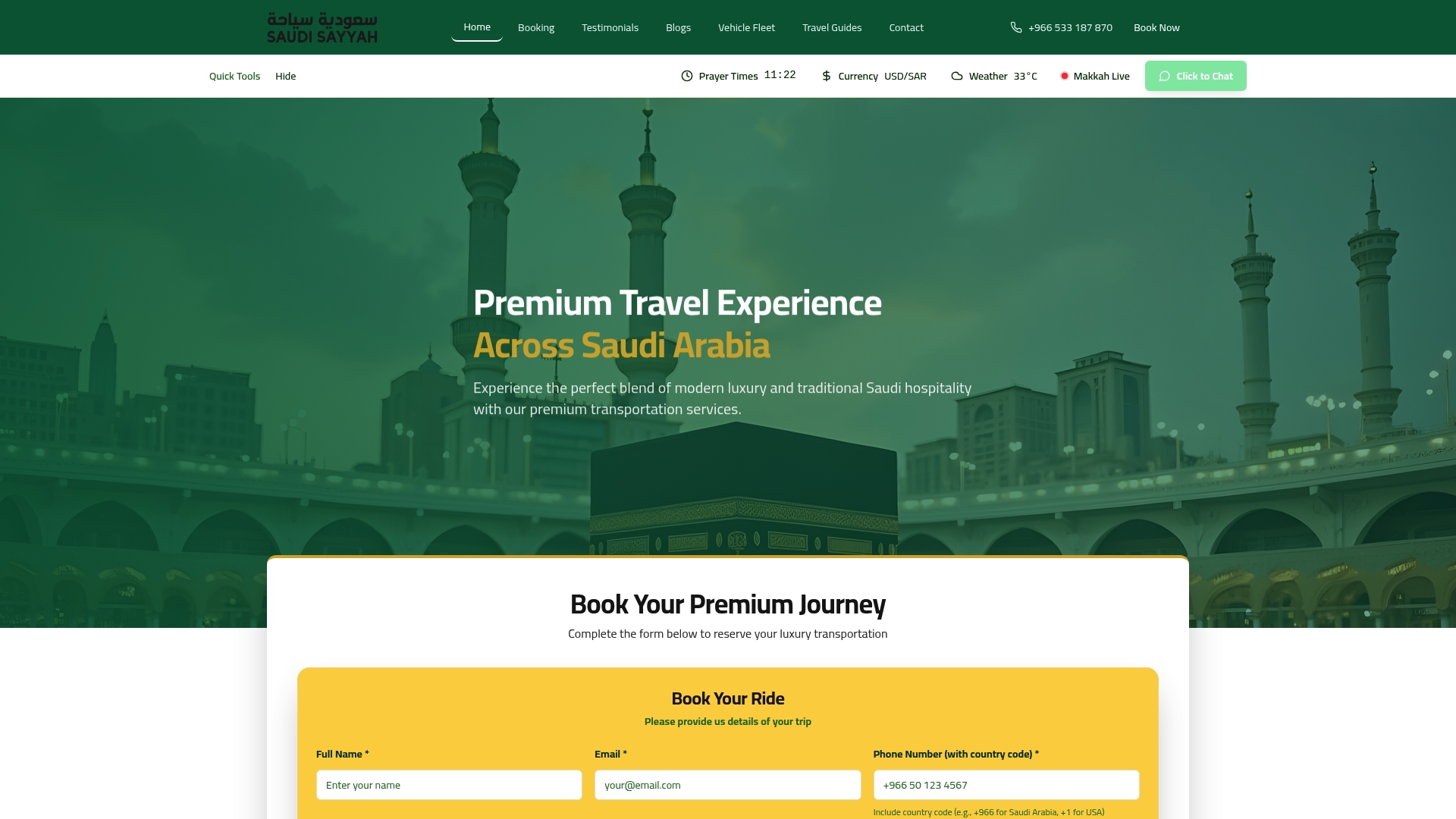
Every booking runs through an automated platform that sends driver photos, vehicle details, and real-time tracking before the trip starts. Buses and ride-hailing apps work well for flexible days, but a managed transfer removes the uncertainty around prayer-time traffic and sold-out seasonal schedules covered above.
- Point-to-point transfers for hotel-to-Haram or city-to-city trips.
- Airport transfers from the local airport to your hotel.
- Hire by the Hour for flexible, multi-stop days.
- Ziarah Packages covering religious and historical sites.
Check current services and book a transfer on the Saudi Sayyah services page.
FAQ
What is the official transport app for Medina?
Madinah Bus has its own official app for route information and payment, and the city's Smart Madinah program also describes a companion app called Move-in-Al-Madinah that centralizes transit schedules and payment details. Both are separate from third-party ride-hailing apps like Careem or Uber.
What are the Madinah Bus operating hours in 2026?
Many Madinah Bus routes, including lines 400 through 403, run on a schedule of roughly 06:00 to 22:00. Exact hours can vary by specific route, so checking the SAPTCO or Madinah Bus page before a trip is worth the minute it takes.
What transport options are available in Medina?
Medina offers the official Madinah Bus network, SAPTCO intercity buses, the Haramain High-Speed Railway, taxis, ride-hailing apps, and walking or short shuttles near the Haram. Private transfer services, including fixed-price options through providers like Saudi Sayyah, cover the gaps when schedules or access rules make public transport less practical.
What is the main bus station in Medina called?
SAPTCO operates the city's scheduled public bus lines, including the numbered routes documented on its Madinah Bus page, alongside separate intercity terminals for longer journeys. The exact station name used locally can vary by neighborhood and route.
Sources
- Haj
- Haramain High-Speed Railway — Visit Saudi
- The Ultimate 2026 Madinah Transport Guide: Save Money & Avoid Hassle