
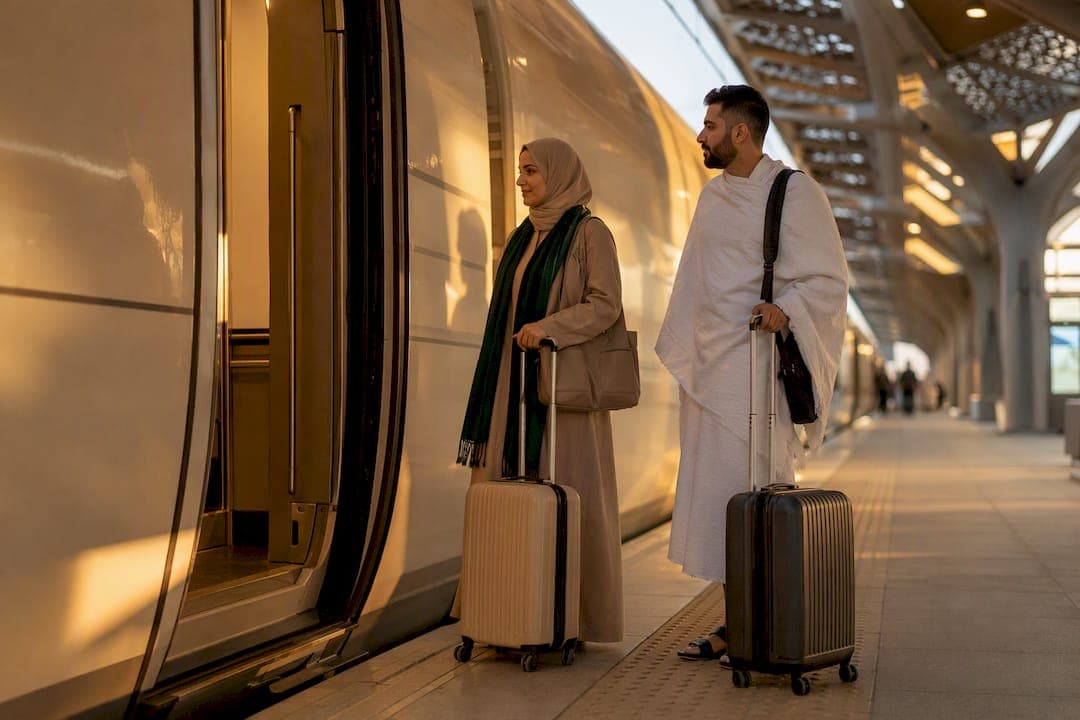
Visits along the Makkah-Madinah route fall into three formats: packaged Umrah-and-ziyarah trips, point-to-point transfers, and guided tours to historic sites. Most travelers move between the two cities by the Haramain High-Speed Train (roughly two hours) or a private road transfer (four and a half to six hours). Before anything else, confirm your Nusuk permit status for Rawdah access and lock in a vetted transfer, since seats and slots fill fast during peak season.
TL;DR:
- Book train seats and permit slots early, especially during peak seasons like Ramadan and Hajj, to secure availability and avoid last-minute issues.
- Private transfers take four and a half to six hours, making them preferable for families or travelers with luggage, while trains take about two hours for faster transit.
- Guided Ziyarat tours enhance efficiency, with key sites like Rawdah Sharifa, Seven Mosques, Masjid Quba, and Masjid Qiblatain frequently included in itineraries.
- Vague transfer times and lack of support contacts are common in unverified packages, so confirm local assistance availability and support before booking.
- Automated booking platforms with live tracking and driver details improve the Ziyarah experience, especially for first-time pilgrims or family groups.
Table of Contents
- What Visit Formats and Packages Run Along the Makkah-Madinah Route
- Transport Options: Haramain Train, Private Transfers, and Buses
- Key Historical and Religious Stops on the Route
- Permits, Official Initiatives, and Booking Essentials
- Practical Planning Checklist Before You Travel
- Why Technology-Enabled Transfers Change the Ziyarah Experience
- Book Your Makkah-Madinah Transfer With Saudisayyah
- Sources
- FAQ
What Visit Formats and Packages Run Along the Makkah-Madinah Route
Pilgrims combining both cities usually pick one of two structures. Short transfer-and-ziyarah packages run one to three nights in Madinah, built around a single round of prayer visits and a handful of historic stops. Extended cultural visits stretch across multiple days, mixing devotional time with slower-paced stops at sites tied to early Islamic history.
Package quality varies more than the price tag suggests. Before booking anything for زيارات طريق مكة المدينة, check what's actually included:
- Airport pickup at Jeddah (JED) or Madinah (MED), and whether it's included or billed separately
- Hotel proximity to the Haram in both cities (walking distance matters more in Madinah than most travelers expect)
- Whether guided Ziyarat is included or offered as an add-on
- The intercity transport mode: train, private car, or shared coach
- How the operator handles Rawdah access and permit paperwork
Watch for vague transfer times, no baggage-handling plan, and no local contact number. A package without a named point of contact for the road or rail leg is a package you should skip. Ask directly whether support is available around the clock, not just during business hours in Riyadh.
Transport Options: Haramain Train, Private Transfers, and Buses
Three transport modes cover almost every trip between the two cities, and each fits a different kind of traveler.
- Haramain High-Speed Train. The line covers roughly 449 kilometers and runs at speeds up to 300 km/h, cutting the journey between the two cities to about two hours. Tickets sell out during Ramadan and Hajj, so book early and plan your own transfer from the station to your hotel, since the train doesn't drop you at the door.
- Private transfers. Door-to-door service on the road typically takes four and a half to six hours depending on traffic and checkpoints. This is the better option for families, older travelers, or anyone hauling more luggage than fits comfortably on a train.
- Shared coaches and scheduled buses. These cost less but run on fixed departure times with limited flexibility. During peak season, expect longer waits and build in extra buffer time.
Saudi Arabian Railways has expanded capacity to match demand, running more than 140 daily trips during peak periods like Ramadan and Hajj. That's a meaningful jump from off-peak scheduling, and it tells you something: even with more trains running, seats still move fast.
For the airport leg specifically, whether you land at King Abdulaziz International Airport in Jeddah or Prince Mohammad bin Abdulaziz International Airport in Madinah, a prebooked transfer avoids the scramble of negotiating with drivers at the curb after a long flight.
Pro Tip: Book your Haramain train seats and any airport transfer at the same time you confirm your permit dates. Peak-season trains and vetted private cars both get reserved weeks out, not days.
Key Historical and Religious Stops on the Route
Madinah anchors most itineraries, and a handful of sites come up again and again in planning:
- Rawdah Sharifa inside the Prophet's Mosque requires a permit through the Nusuk system, and access windows are tightly managed. Plan for a short visit inside, but a longer wait outside it during busy hours.
- The Seven Mosques mark the site of the Battle of the Trench and take most groups under an hour to walk through.
- Masjid Quba, the first mosque built in Islam, draws steady crowds but moves quickly since it's mostly a photo-and-prayer stop.
- Masjid Qiblatain marks where the direction of prayer changed, a quick 20 to 30 minute visit for most travelers.
- Bir 'Adhq and other well sites from the early pilgrimage routes are less crowded and often skipped on tight schedules, but they add historical context that busier sites don't.
Older waypoints from historic pilgrimage paths, wells and stone markers, rarely make it onto modern Ziyarah routes. They're not gone, just deprioritized in favor of sites with clearer religious significance and easier access.
Guided Ziyarat earns its cost here. A driver or guide who already knows which entrance is open and which line moves faster saves real time in a single afternoon, especially for first-time pilgrims trying to parse crowd flow at Masjid Quba on a Friday.

Permits, Official Initiatives, and Booking Essentials
The Makkah Route initiative is the single biggest administrative shortcut available to eligible pilgrims. It handles visa checks, passport control, and biometric verification before departure, so arrival in the Kingdom skips the usual airport lines entirely.
By the numbers: In 2026, the initiative served 388,694 pilgrims across 1,227 flights from 10 countries and 17 exit points. That's a large share of eligible international arrivals moving through a faster lane, which matters if you're coordinating a group arrival and want predictable timing.
Beyond the Makkah Route, a few things to confirm before you travel:
- Nusuk governs permit-controlled access to Rawdah and other regulated sites. Check your slot before you land, not after.
- The Ministry of Hajj and Umrah publishes a seasonal calendar defining when visa and permit windows open and close.
- The final ten days of Ramadan and the Hajj season carry stricter access rules, and some routes require an authorized operator rather than independent travel.
Practical Planning Checklist Before You Travel
Book train seats, transfers, and permit slots as soon as your dates firm up, not the week before. Confirm with your operator ahead of time: pickup location, expected road or rail time, and what happens if a flight runs late.
Pack for heat exposure on any road leg, water, sun protection, and a basic med kit matter more than people expect on a five-hour drive. If you want peace of mind from your transport provider, ask for a driver photo, vehicle details, and real-time tracking before the trip starts.

Pro Tip: Request 24/7 contact information from any operator, not just a booking confirmation. A phone number that actually gets answered at 2 AM is worth more than a polished itinerary.
Why Technology-Enabled Transfers Change the Ziyarah Experience
Automated booking and live tracking solve a problem pilgrims have dealt with for years: not knowing who's picking them up or when. A confirmed driver photo and vehicle match before the trip starts removes that anxiety completely.
This matters most for family groups and older pilgrims making their first trip. A modern, well-maintained fleet and a driver who shows up on time aren't luxuries here. They're what let someone focus on the visit itself instead of logistics.
— Fa
Book Your Makkah-Madinah Transfer With Saudisayyah
A technology-driven, automated booking platform can provide a driver's photo, vehicle details, and live tracking before the trip starts. This is a real advantage over piecing together transport on your own or hoping a curbside driver shows up as promised.
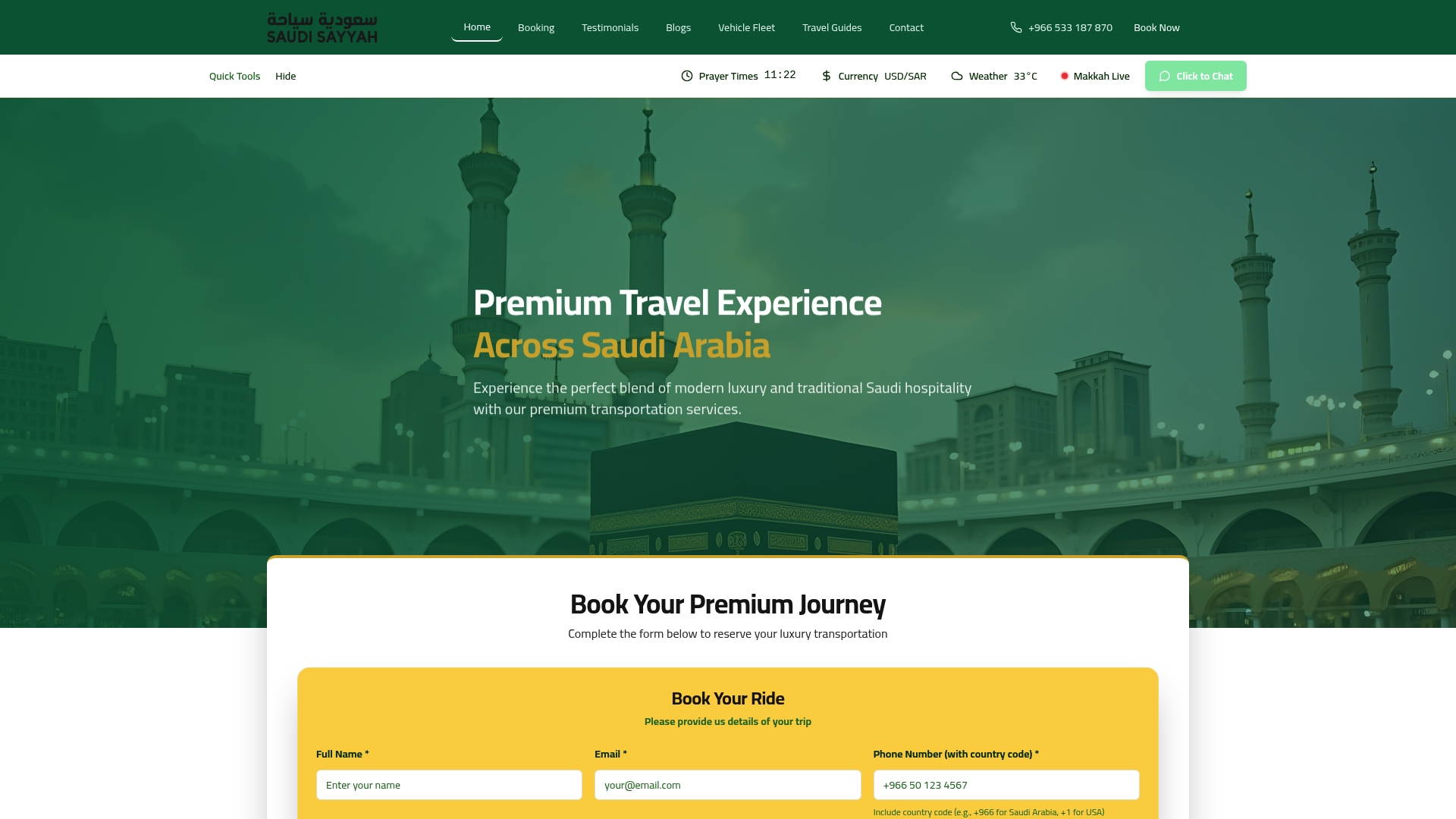
Whether you need an airport transfer from Jeddah or Madinah, a private point-to-point ride between the two cities, a guided Ziarah package, or a vehicle by the hour for a flexible day of visits, Saudisayyah's services page covers all of it. Before you book, have your travel dates and permit confirmations ready, that speeds up scheduling and helps match you with the right vehicle for your group size. Check availability now and get your driver details confirmed before you land.
Sources
- SPA: Makkah Route Initiative passenger statistics
- PEP: Haramain High-Speed Train service and capacity
- Ministry of Hajj and Umrah: Umrah season calendar and booking windows
FAQ
What Is the Makkah Route Initiative?
The Makkah Route initiative processes visa, passport, and biometric checks at the departure airport, so eligible pilgrims skip those steps on arrival in Saudi Arabia. In 2026, it served 388,694 pilgrims through 1,227 flights across 10 countries, cutting arrival delays for those travelers.
How Long Does It Take to Travel From Makkah to Madinah by Car?
A private road transfer between the two cities typically takes four and a half to six hours, depending on traffic, checkpoints, and time of year. The Haramain High-Speed Train covers the same distance in roughly two hours and is faster for most travelers without heavy luggage.
What Is the Best Route From Madinah to Makkah?
Most travelers choose between the Haramain High-Speed Train, which takes about two hours station-to-station, or a private road transfer, which takes longer but delivers door-to-door service. A prebooked private transfer works best for families or groups with luggage, while the train suits solo or light-luggage travelers who don't mind arranging a separate hotel pickup.
What Are the Main Ziyarah Sites in Makkah and Madinah?
In Madinah, the most visited sites include Rawdah Sharifa (permit-controlled), the Seven Mosques, Masjid Quba, Masjid Qiblatain, and Bir 'Adhq. Guided Ziyarat tours typically cover these in a half-day to full-day itinerary, moving faster through crowds than self-guided visits.
Does Saudi Sayyah Offer Ziarah Packages Between Makkah and Madinah?
Yes, Saudisayyah offers Ziarah packages alongside point-to-point transfers, airport pickups, and hourly vehicle hire. Current pricing is available directly on the services page.