
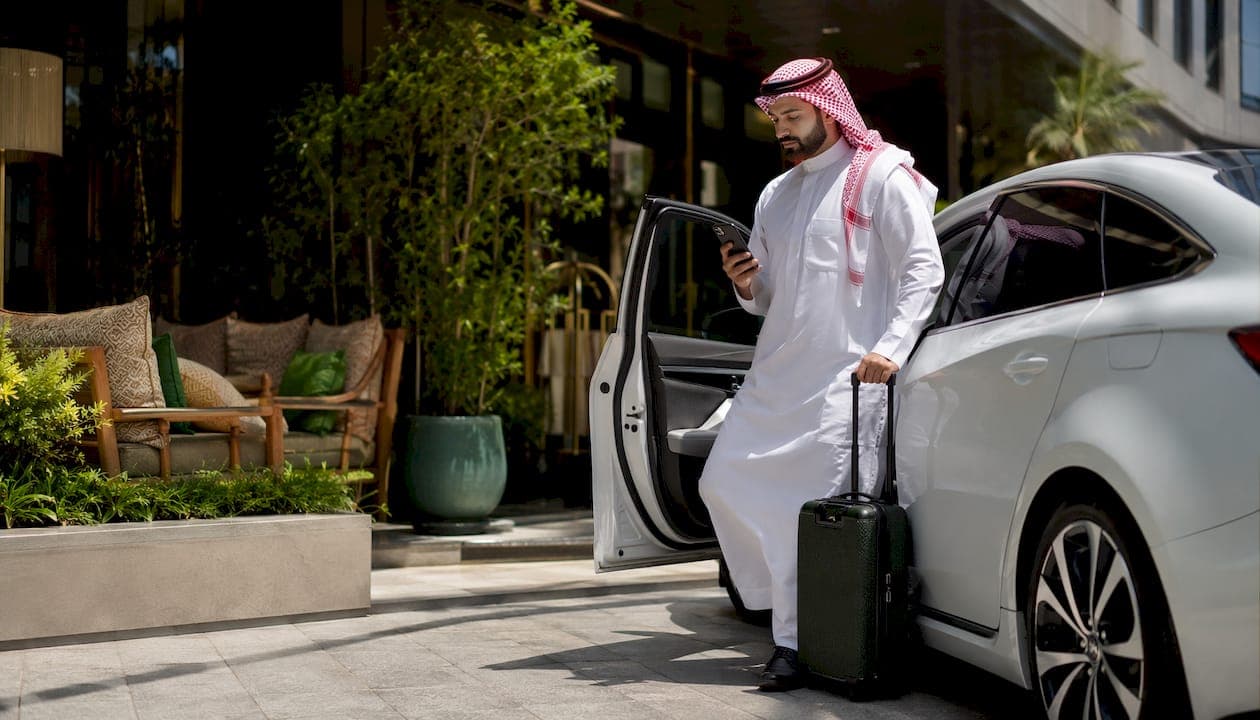
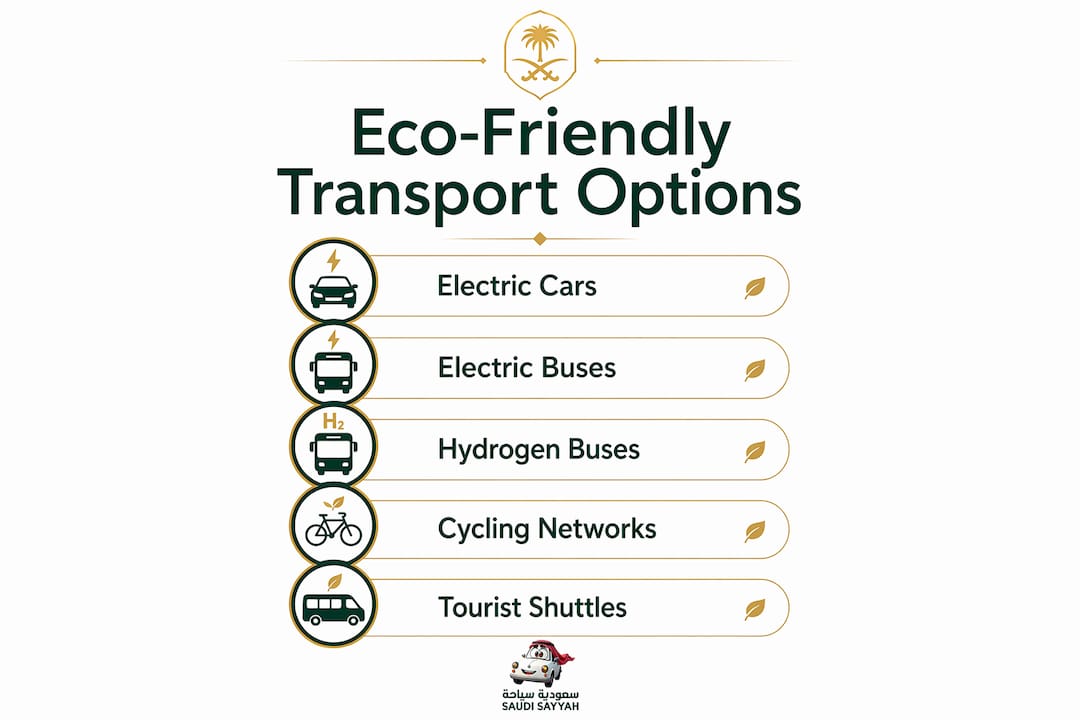
The top eco-friendly transport options in Saudi Arabia for pilgrims are:
- Electric and hybrid private transfers — low-emission, door-to-door, available for airport pickups and intercity routes including Makkah, Madinah, and Jeddah
- Electric shuttles and buses — SAPTCO operates electric buses in Madinah and other cities; range approximately 250 km per charge
- Hydrogen-powered intercity buses — SAT (a SABTCO subsidiary) launched Saudi Arabia's first hydrogen intercity bus, capable of 635 km per charge, connecting Dammam to Al-Ahsa
- Madinah cycling network — over 220 km of dedicated lanes and 165+ bicycle stations for short urban trips
- Autonomous and last-mile pods — pilot programs underway; not yet available for general pilgrim use
For premium low-emission private transfers tailored to Umrah and Hajj, Saudisayyah provides pre-trip driver and vehicle details, real-time geolocation tracking, and an internationally-compliant automated booking system.
Table of Contents
- What eco-friendly transport options in Saudi Arabia work for pilgrims?
- How do you book a premium eco-friendly transfer for Umrah or Hajj?
- Saudisayyah: premium eco-conscious transfers for Umrah and Hajj
- Key Takeaways
What eco-friendly transport options in Saudi Arabia work for pilgrims?
Saudi Arabia's green transportation push covers several modes. Not all are equally practical for pilgrims. Here is what is available and where each one fits.
Electric and hybrid private cars are the most practical option for pilgrims today. They cover airport-to-hotel, hotel-to-holy-site, and intercity legs. Premium providers offer latest-model hybrid and electric vehicles with full climate control and accessibility options.
Electric buses (SAPTCO) run in Madinah, Jeddah, and Tabuk. Tabuk's network spans 136 km across five routes, with electric vehicles making up 25% of the fleet. These are city-level services, not pilgrimage-route shuttles.
Electric tourist shuttles operate at resort destinations and major attractions. The Red Sea project runs fully on renewable energy, and its connectivity includes Red Sea International Airport, illustrating what is sustainable tourism principles in practice. Eco-minded travelers heading to coastal or desert sites will find electric shuttle options at those hubs.
Hydrogen intercity buses are emerging. The first hydrogen-powered intercity bus in Saudi Arabia launched on the Dammam–Al-Ahsa route. Hydrogen transit for Makkah–Madinah corridors is not yet operational.
Madinah cycling network suits short urban trips. With 165+ stations and 220+ km of lanes, cycling is a real option for moving between sites within Madinah. Careem launched Saudi Arabia's first public electric bicycle and scooter network in Madinah in 2023.
| Transport Type | Best Use for Pilgrims | Key Constraint |
|---|---|---|
| Electric/hybrid private car | Airport transfers, intercity, holy sites | EV charger density varies near Makkah |
| Electric public bus (SAPTCO) | City mobility in Madinah, Jeddah | Not a direct pilgrimage-route service |
| Electric tourist shuttle | Resort and attraction access | Limited to specific destinations |
| Hydrogen intercity bus | Dammam–Al-Ahsa corridor | Not yet on Makkah–Madinah routes |
| Madinah cycling network | Short urban trips within Madinah | Seasonal heat; not suited for elderly pilgrims |
| Autonomous/last-mile pods | Pilot areas only | Not available for general pilgrim use |
National transport policy prioritizes active transport, electrification, and public transit to cut carbon emissions. That policy is driving the infrastructure pilgrims will encounter. During Hajj and Umrah peak seasons, vehicle availability tightens and pricing rises across all modes. Pre-booking is the only reliable protection.
Saudi Arabia's regenerative tourism model goes beyond basic sustainability. Major projects actively restore ecosystems while delivering premium experiences. Pilgrims traveling to resort or heritage sites can expect electric or hybrid transfers as the standard, not the exception.
Pro Tip: When a provider claims an eco-label, ask for the vehicle model year and fuel type in writing. Request the pre-trip vehicle photo and tracking link before you confirm. Generic "green" language without specs is not verification.
How do you book a premium eco-friendly transfer for Umrah or Hajj?
Choose a provider that confirms vehicle emission specs, sends pre-trip driver and vehicle details, and guarantees service during peak pilgrimage seasons. Then follow this checklist.
- Reserve at least 4–6 weeks before Hajj or Umrah dates. Vehicle availability drops sharply during peak seasons.
- Confirm vehicle model, year, and fuel type at booking. Ask for hybrid or electric options specifically. Check the fleet specs before confirming.
- For EV intercity legs, confirm charging stops and total range. Get a conventional backup option confirmed in writing.
- Request accessibility accommodations at booking, not on the day. See accessible transport options for what to ask.
- Get fixed-rate pricing in writing for Hajj and Umrah dates. Surge pricing is common during peak seasons.
Questions to ask any provider:
- What is the vehicle model, year, and battery range?
- Does the driver have experience on pilgrimage routes?
- What is the cancellation and surge-pricing policy during Hajj/Umrah?
- How does real-time tracking work, and what is the contact procedure?
- What accessibility equipment is available?
Pricing guidance: Premium eco-friendly private transfers in Saudi Arabia vary by route and season. Airport pickups and short city transfers are generally lower cost. Intercity routes (Makkah to Madinah) and hourly hires carry higher rates, with significant surges during Hajj. Fixed-rate bookings made in advance are the most cost-effective approach for pilgrimage dates. For luxury transport options and current pricing, confirm directly with your provider.
Pro Tip: For any EV intercity booking, confirm both the departure charging window and the arrival charging plan before you pay. Define the conventional backup vehicle option in the booking confirmation itself.
Saudisayyah: premium eco-conscious transfers for Umrah and Hajj
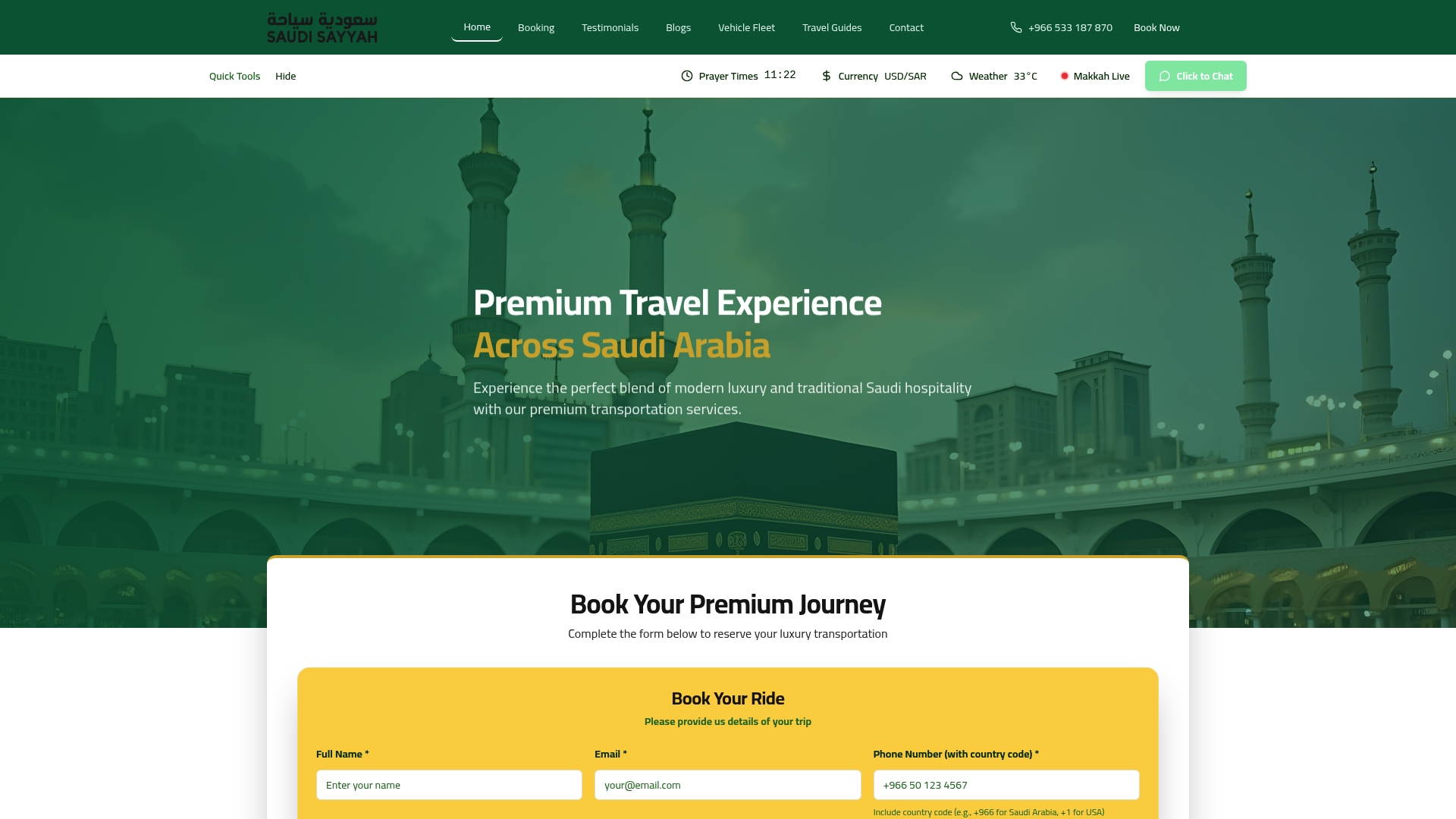
Saudisayyah offers premium low-emission private transfers built for Umrah and Hajj. Every booking includes pre-trip driver photos, vehicle details, and real-time geolocation tracking. The automated, internationally-compliant booking system handles fixed-rate pricing, peak-season reservations, and constant communication throughout the trip.
What pilgrims get:
- Latest-model hybrid and electric vehicles on request
- Vetted drivers experienced with pilgrimage routes
- Airport pickups, point-to-point transfers, and intercity journeys
- Accessibility options for elderly and mobility-limited pilgrims
- Fixed-rate booking confirmed in advance for Hajj and Umrah dates
Book early. Confirm vehicle type and emission specs at the time of reservation. View available services and reserve your transfer now.
Key Takeaways
Electric and hybrid private transfers are the most practical eco-friendly option for pilgrims today, with Madinah's cycling network and SAPTCO electric buses adding urban alternatives.
| Point | Details |
|---|---|
| Best option for pilgrims | Electric/hybrid private transfers cover airport, intercity, and holy-site routes reliably. |
| Madinah cycling network | Over 220 km of lanes and more than 165 stations support short urban trips within Madinah. |
| Hydrogen buses | SAT's first hydrogen intercity bus covers 635 km per charge; Makkah–Madinah routes not yet served. |
| Book early, fix the rate | Peak Hajj and Umrah seasons cause availability drops and price surges; advance fixed-rate booking is essential. |
| Saudisayyah | Provides pre-trip driver and vehicle details, real-time tracking, and fixed-rate eco-conscious transfers for Umrah and Hajj. |