
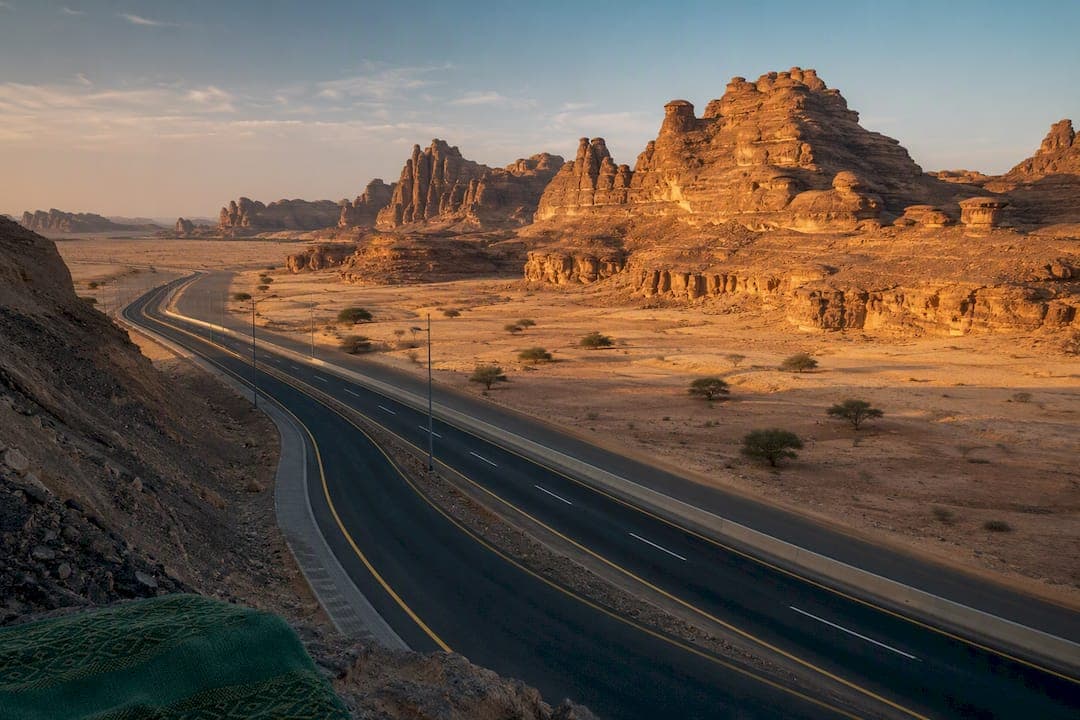
Yes, driving from Medina to Al-Ula is a practical, popular choice. The trip covers roughly 350–400 kilometers and takes about three to four hours depending on your route and stops. Roads are paved and well maintained, gas stations are frequent, and most travelers find it an easy half-day drive rather than an ordeal.
TL;DR:
- The drive from Medina to Al-Ula typically takes three to four hours over a distance of 350 to 460 kilometers, depending on starting point and stops.
- Most drivers choose the main highway route with consistent conditions, speed limits of 120 km/h, and clear signage after the halfway point.
- Planning fuel stops every 90 to 120 minutes and scheduling breaks at towns or viewpoints enhances comfort, especially in remote areas.
- Parking in Old Town relies on park-and-ride shuttles, and most visitors use guided transfers or taxis to access dispersed sites like Hegra and the Old Town district.
- Booking a vetted transfer service can save time, reduce stress, and provide real-time tracking, especially for groups, elderly travelers, or during peak events.
Table of Contents
- Which Route Should You Take From Medina to Al-Ula?
- What Should You Prepare Before You Leave Medina?
- How Do You Actually Drive the Route Step by Step?
- Where Should You Stop Along the Way?
- Where Do You Park Once You Reach Al-Ula?
- What Safety Rules and Seasonal Factors Should You Know?
- How Saudi Sayyah Handles the Medina to Al-Ula Run
- What This Route Actually Rewards (and What It Doesn't)
- Skip the Drive: Book a Transfer Instead
- Sources
- FAQ
Which Route Should You Take From Medina to Al-Ula?
Most drivers take the main highway corridor north out of Medina toward Al-Ula, a route Experience AlUla puts at around three hours under normal conditions. The Royal Commission for AlUla frames the same drive at three to four hours, and that half-hour gap usually comes down to stops, not traffic. Highway conditions stay consistent for most of the route: two-lane sections widen periodically, speed limits sit around 120 km/h on open stretches, and signage toward Al-Ula becomes clearer once you pass the halfway mark.
There is no meaningfully faster alternative road, so route choice mostly means deciding how many breaks you want to build in.
- Direct highway route: the fastest option, roughly 3 hours with minimal stops.
- Route with rest breaks: adds 30 to 60 minutes for fuel, prayer, and food.
- Route with sightseeing detours: can stretch to 4.5 hours if you stop at viewpoints or small towns along the way.
Traffic rarely becomes a factor outside of major holidays or AlUla event season, when RCU itself advises booking transport and accommodation ahead of time to avoid congestion near the town.
What Should You Prepare Before You Leave Medina?
A few minutes of preparation in Medina saves hours of hassle later, especially if you are renting a car for the first time in Saudi Arabia.
- Carry your documents. Bring your Saudi ID or Iqama, passport, and a valid driving license. Foreign visitors driving in Saudi Arabia are commonly advised to carry an international driving permit alongside their home license.
- Check the rental terms. Confirm insurance coverage, the fuel policy (full-to-full is standard), and get the vehicle's condition and odometer reading in writing or on video before driving off.
- Plan your fuel range. Fill the tank in Medina and top off at the first opportunity outside the city; some rural stretches thin out gas stations for 60 to 80 kilometers at a time.
Pro Tip: Photograph every panel of the car, plus the odometer, before you leave the rental lot in Medina. It takes two minutes and settles almost any dispute over dents or fuel level at drop-off.
If you flew into Medina airport rather than starting from the city center, factor in the extra time to reach the highway from the terminal.
How Do You Actually Drive the Route Step by Step?
Starting from central Medina, join the northbound highway that leads out past the city's outer districts. If you are coming straight from Prince Mohammad bin Abdulaziz International Airport, you will merge onto the same corridor from a different entry point, adding roughly 15 to 20 minutes compared to a city-center start.
The drive breaks into three practical segments:
- Medina to the halfway markers (roughly 90 minutes): mostly open highway, minimal turns, steady speed limits.
- Midpoint to the Al-Ula turnoff (roughly 60 to 90 minutes): this is where several regional guides estimate the total distance lands between 350 and 460 kilometers depending on your exact starting point.
- Final approach into Al-Ula (roughly 20 to 30 minutes): signage improves noticeably, with clear markers for Al-Ula town, Hegra, and the Old Town district.
GPS apps handle the route reliably since it is a single major road for most of the way, but keep a downloaded offline map as backup. Coverage is generally solid, though it can dip briefly in low-lying desert stretches.
One detail that trips up first-time visitors: Al-Ula is not one single arrival point. Hegra, the Old Town, and festival venues each sit in different parts of the area, so confirm exactly which site or hotel you are heading to before you get close, rather than aiming for "Al-Ula" as a single destination.

Where Should You Stop Along the Way?
The drive is short enough that you do not need an elaborate stop schedule, but a couple of planned breaks make the trip far more comfortable.
- Fuel and restroom stops: plan one stop roughly every 90 minutes to 2 hours, since stations thin out on some rural sections.
- Food stops: small towns along the corridor offer basic restaurants and convenience stores; eat before the final stretch if you are arriving in the evening.
- Quick viewpoints: a few desert overlooks are worth a five-minute photo stop if you are not racing the clock.
Travel guides commonly recommend avoiding long stretches of night driving on remote desert highways, so if you are leaving late, plan your breaks for daylight hours and push arrival to before dark when possible.
Where Do You Park Once You Reach Al-Ula?
Old Town has essentially no parking of its own. Instead, two park-and-ride car parks serve visitors, with free shuttle or golf-cart connections into the historic center and toward Hegra's visitor areas.
- North and south car parks: leave your car here and use the shuttle rather than trying to find street parking near Old Town.
- Reaching Hegra: most visitors book a guided transfer or shuttle from the visitor center rather than driving directly to the site.
- Keeping the rental car: useful if you plan to explore outside the main cluster of attractions; otherwise, Experience AlUla itself recommends taxis, ride-hailing, or a private driver once you have arrived, since the sites are spread out.
What Safety Rules and Seasonal Factors Should You Know?
Seatbelts are mandatory for all occupants, cellphone use while driving is enforced, and speed cameras are common on this corridor, so stick to posted limits rather than guessing.
Coverage gaps are rare but possible in low desert stretches; save the Saudi emergency number (911 in most regions, 999 in some) offline before you leave. In summer, check your tires and air conditioning before departure, since desert heat is hard on both. In winter, night temperatures can drop sharply, so carry a light jacket even midday. During major AlUla events, RCU's own advice to book transport and lodging ahead applies just as much to drivers as to flight passengers.

How Saudi Sayyah Handles the Medina to Al-Ula Run
Not every trip needs a rental car and a road map. Saudi Sayyah's Intercity Transfers and Point to Point Transportation cover the Medina to Al-Ula corridor with vetted drivers and a modern fleet, so you skip the paperwork and fuel planning altogether. Before pickup, you get the driver's photo, vehicle details, and real-time GPS tracking through the booking platform, which matters most for groups, elderly pilgrims, or anyone working around a tight flight or event schedule. Ziarah packages extend the same setup to guided stops at religious and historical sites once you are settled in Al-Ula. For travelers who would rather arrive rested than watch highway markers for four hours, a managed transfer often solves more than it costs.
What This Route Actually Rewards (and What It Doesn't)
Most guides to this drive read like general tourism copy: pretty photos, vague time estimates, and little that helps you actually plan the day. The honest picture is simpler. The road itself is not the hard part. Al-Ula's layout is. Treating the destination as one arrival point instead of several scattered sites (Hegra, Old Town, festival grounds) causes more confusion than the highway ever does.
Conventional advice overweights the drive and underweights what happens after you park. Two park-and-ride lots and shuttle service handle Old Town access fine, but plenty of visitors still show up expecting to drive straight to Hegra's gates. That expectation costs more time than the entire highway segment from Medina.
If you are self-driving, prioritize your documents and rental condition photos first, your fuel stops second, and your exact arrival point third. Skip the anxiety about the highway itself. It is one of the more forgiving long drives in the country. Where this guide differs from typical tourism pages is in treating the last twenty minutes, the parking, the shuttle, the "which Al-Ula" question, as the part actually worth planning for.
— Fa
Skip the Drive: Book a Transfer Instead
Saudi Sayyah gets you from Medina to Al-Ula without the rental paperwork, fuel planning, or four hours behind the wheel, at a fixed rate agreed before you travel.

Every booking includes a professional driver, a modern vehicle, and pre-trip details sent to your phone: driver photo, vehicle information, and GPS tracking from pickup to arrival. That matters most for families, elderly pilgrims, or groups arriving on a tight flight connection who cannot afford ambiguity about who is picking them up or where. The Intercity Transfers and Point to Point Transportation options cover the Medina to Al-Ula route directly, and Ziarah packages extend into guided visits once you are there. During AlUla's peak event season, book at least a few days ahead since availability tightens fast. Check current rates and book your Medina to Al-Ula transfer on the services page before your travel dates fill up.
Sources
- Plan your trip to AlUla | The Royal Commission for AlUla
- Getting to and around AlUla | Experience AlUla
- Alula travel guide — Wikivoyage
FAQ
What Is the Distance Between Medina and Al-Ula by Car?
The drive covers roughly 350 to 460 kilometers depending on your exact starting point in Medina and the route you take. Most drivers cover it in about three to four hours on paved highway.
How Long Does It Take to Drive From Al-Ula Back to Medina?
The return trip takes the same three to four hours as the outbound drive, since it follows the same highway corridor in reverse. Traffic and stop frequency affect the total more than direction of travel.
What Is the Best Time of Year to Visit Al-Ula?
Cooler months from October through March offer the most comfortable driving and sightseeing conditions, since summer heat is harsh on both engines and outdoor stops. Winter nights can turn cold quickly, so pack layers even for a daytime arrival.
Can You Drive Straight From Medina to Al-Ula Without Stopping?
Yes, the direct highway drive takes about three hours with minimal stops, though most travelers add 30 to 90 minutes for fuel, food, or short breaks. If you would rather skip the driving entirely, Saudi Sayyah's Intercity Transfers cover the same route with a professional driver.