
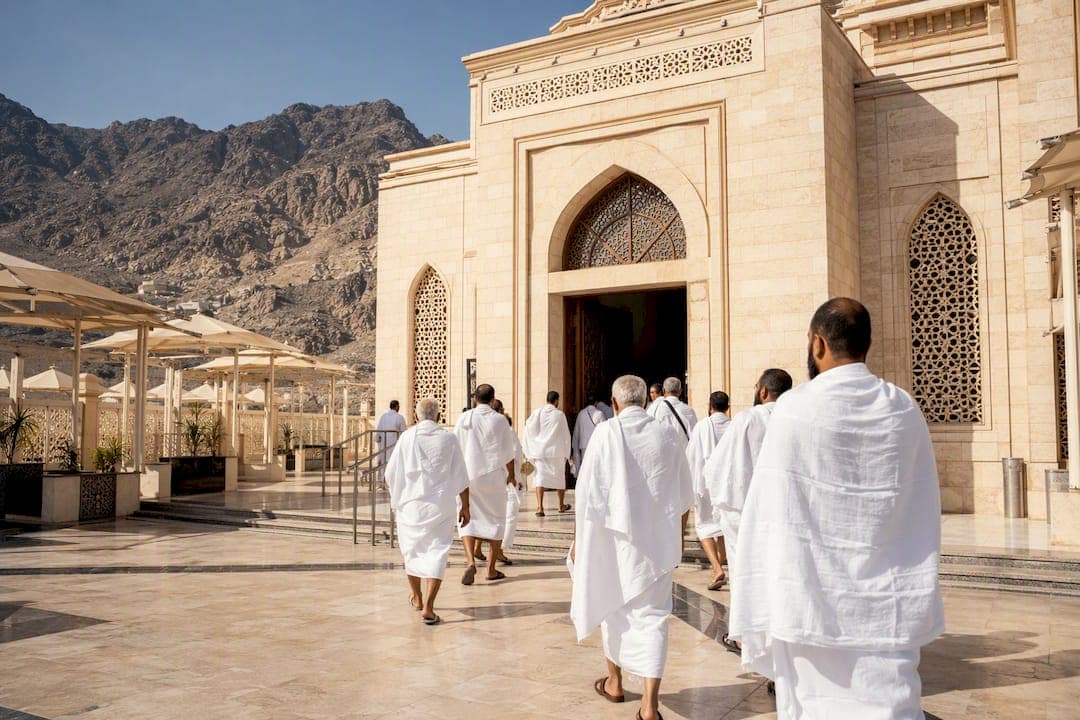
Miqat Al-Sail al-Kabir, historically known as Qarn al-Manazil, is the designated boundary where pilgrims arriving from Najd and central Arabia enter the state of ihram before Hajj or Umrah. It sits in the Makkah Region roughly 75 to 80 kilometers from Al-Haram, at coordinates 21.63306°N, 40.42722°E.
- Modern name: Al-Sail al-Kabir. Historic name: Qarn al-Manazil.
- Who uses it: Pilgrims coming from Najd, Riyadh, the Eastern Province, and anyone passing through this corridor toward Makkah.
- Distance to Al-Haram: approximately 75–80 km, with some sources placing Taif closer at 50–55 km away.
Table of Contents
- What Is the Precise Location of Miqat Al-Sail al-Kabir?
- Why Qarn al-Manazil Became a Historic Miqat
- How Big Is the Mosque and What Facilities Does It Offer?
- Who Must Assume Ihram at This Miqat, and How Should Groups Plan?
- How Far Is Al-Sail al-Kabir From Makkah and Taif?
- What Recent Upgrades Affect the Route and Site?
- How Can Pilgrims Verify Transport and Service Claims?
- Practical Guidance for Visiting Al-Sail al-Kabir
- Where to Verify These Facts Directly
- What the Conventional Advice Gets Wrong About This Miqat
- Sources
What Is the Precise Location of Miqat Al-Sail al-Kabir?
The miqat sits within the jurisdiction of Al-Sail al-Kabir, part of the Taif governorate under the Makkah Region administration. Its coordinates place it at 21°37′59″N, 40°25′38″E, on the historic corridor connecting Taif to Makkah through the mountain terrain of the Hijaz.
The elevation here runs about 1,200 meters, which explains the cooler air compared to Makkah's coastal heat. Travelers coming from Taif descend through Wadi Qarn, a valley that gives Qarn al-Manazil its name, before the road opens into flatter ground near the mosque itself. That descent is not cosmetic. It affects driving conditions, especially when rain hits the Hada and Shafa highlands upstream.
- Sits along the Taif to Makkah road, a route pilgrims and traders have used for centuries.
- Borders Nakhlah al-Yamaniyah and other valley systems feeding into the broader Wadi Qarn network.
- Elevation near 1,200 meters creates a noticeably different climate than the lowland approach through Jeddah.
Quick fact: the miqat's name, Qarn al-Manazil, literally references the "horn" or ridge formation ("qarn") where travelers historically made their stopping points ("manazil") before entering Makkah's sacred zone.
Why Qarn al-Manazil Became a Historic Miqat
Islamic tradition holds that the Prophet Muhammad designated specific boundary points around Makkah where pilgrims from different directions must enter ihram. Qarn al-Manazil is the point set for those arriving from Najd, a designation recorded in hadith collections and repeated across generations of Islamic jurisprudence. Both names, Qarn al-Manazil and Al-Sail al-Kabir, appear throughout government records and classical geography texts, so researchers searching archives should use both terms to find the fullest picture.
The site's importance did not come only from religious designation. For centuries it functioned as a critical junction on the overland route linking Najd and eastern Arabia to Makkah, carrying caravans loaded with goods alongside pilgrims making the same journey for different reasons. Trade and worship moved along the same dusty road, and the miqat became a natural rest point where both kinds of travelers paused before the final approach.
The miqat's significance lies both in its scriptural designation and in its centuries-long role as a trade and pilgrimage artery linking Najd to Makkah.
Regional heritage records maintained by the Royal Commission for Makkah City and Holy Sites document this dual identity, treating the site as both a scriptural landmark and a historical waypoint worth preserving. Contemporary reporting continues to frame the road through Al-Sail al-Kabir as a maintained pilgrimage corridor, not a relic. That framing matters for anyone assuming the miqat is a static historical footnote rather than an active piece of Hajj and Umrah infrastructure.
- Designated by the Prophet as the entry boundary for pilgrims from Najd.
- Referenced under two names across archives: Qarn al-Manazil (classical) and Al-Sail al-Kabir (modern).
- Functioned historically as a caravan stop linking trade routes with pilgrimage routes.
How Big Is the Mosque and What Facilities Does It Offer?
The mosque complex at Al-Sail al-Kabir covers a site area of roughly 2,600 square meters, with capacity for about 3,000 worshippers at once. That figure surprises a lot of first-time visitors who picture a small roadside shrine rather than a working mosque built to absorb Hajj-season crowds.
Statistic snapshot: Site area ≈ 2,600 m². Mosque capacity ≈ 3,000 worshippers. Elevation ≈ 1,200 meters. Distance to Al-Haram ≈ 75–80 km.
The mosque underwent a major renovation during the King Fahd era, around 1402 AH, when Saudi authorities expanded the structure and modernized its infrastructure to match growing pilgrim numbers. Regional heritage reporting on the Al-Sail al-Kabir route's history frames that renovation as part of a broader pattern of investment in miqat sites across the kingdom, not an isolated upgrade.
Today's facilities go beyond a bare prayer hall:
- Restrooms and ablution areas built to handle high-volume pilgrim traffic.
- Parking lots sized for buses, private vehicles, and group transport.
- Climate-controlled or shaded prayer spaces to offset the site's exposed elevation.
- Layout suited to both individual travelers and organized group arrivals.
None of this infrastructure existed in its current form a few decades ago. The contrast between the historic caravan stop and the modern mosque complex is one of the more striking things about visiting in person.
Who Must Assume Ihram at This Miqat, and How Should Groups Plan?
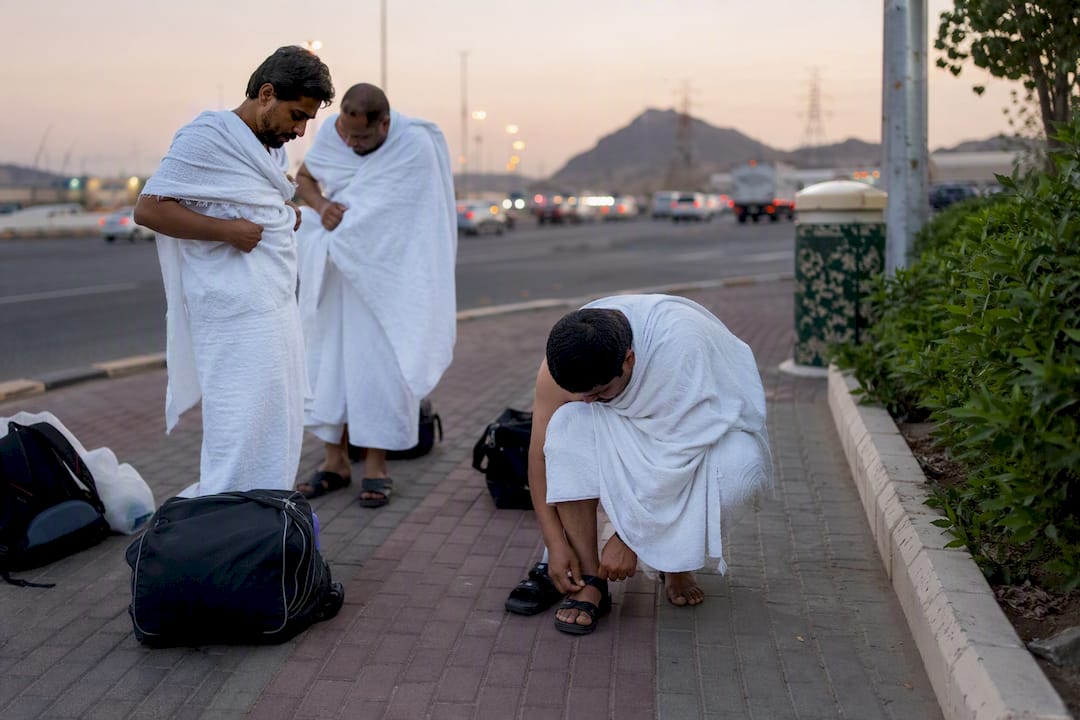
Anyone traveling from Najd, Riyadh, the Eastern Province, or any location beyond Al-Sail al-Kabir toward Makkah for Hajj or Umrah must enter ihram at or before this boundary. Residents already living within the miqat boundary follow different rules and generally enter ihram from their own location rather than traveling out to the site. Pilgrims merely passing through the area without pilgrimage intent are not bound by the same requirement, though most scholars advise erring on the side of entering ihram early if there's any uncertainty about intent or route.
Practical logistics matter as much as the ruling itself:
- Confirm the stopping point with your driver before departure. Bus and private car drivers don't always stop at the same exact spot, and a missed miqat means backtracking.
- Coordinate group timing in advance. Large tour groups should agree on a single ihram stop to avoid splitting the group across two locations along the route.
- Ask local religious authorities about atypical routes. Flights, alternate roads, or unusual itineraries sometimes bypass the standard boundary, and that changes the applicable ruling.
Pro Tip: Confirm your exact ihram stopping point with your driver or tour operator before leaving Taif or Riyadh, not after you're already on the road. Miqat boundaries are fixed, but human error on when to stop is the most common mistake groups make.
How Far Is Al-Sail al-Kabir From Makkah and Taif?
Distance figures vary slightly depending on the source, so it's worth treating them as ranges rather than fixed numbers. Most official reporting places the miqat roughly 75 to 80 kilometers from Al-Haram, while other compiled records put the distance to Taif closer to 50–55 km.
- Distances to Makkah and Taif are commonly cited in sources as ranges around 75 to 80 kilometers and roughly 50 to 55 kilometers respectively.
- Driving time under normal conditions: generally under two hours, longer during Hajj season traffic.
Terrain callout: the route drops from elevated Hada and Shafa highlands through Wadi Qarn before leveling out near the miqat, and that elevation change can add meaningful time to a trip during rain or fog.
Build in extra margin when scheduling around Hajj or peak Umrah periods. Traffic volume through this corridor spikes hard during those windows, and a drive that normally takes 90 minutes can stretch well past two hours. Pilgrims booking transport for a specific ihram timing should treat published drive times as a floor, not a guarantee.
What Recent Upgrades Affect the Route and Site?
Saudi transport authorities have continued treating the Taif to Makkah corridor through Al-Sail al-Kabir as an active maintenance priority, with targeted road upgrades designed to keep pilgrim flow steady through the mountain pass sections. Press coverage from outlets like Al Arabiya continues to document the miqat's ongoing service to pilgrims moving between Taif and Makkah, describing both the terrain challenges and the maintenance efforts that keep the corridor functional.
- Road maintenance projects along the Taif to Makkah corridor targeting pilgrim season traffic.
- Seasonal crowd management coordinated by regional authorities during Hajj and peak Umrah windows.
- Site upkeep tied to the mosque's original King Fahd era renovation standards.
Pilgrims planning a trip during high season should check official channels for any temporary closures or diversions before finalizing transport arrangements. A route that's open in March may see temporary restrictions in June depending on construction schedules or crowd control measures.
How Can Pilgrims Verify Transport and Service Claims?
Booking transport for a trip through Al-Sail al-Kabir means trusting a driver you've likely never met with a genuinely sacred moment in your journey. Saudisayyah built its booking system around that exact concern: automated, internationally-compliant booking management, driver vetting, geolocation-enabled tracking, and constant communication so pilgrims aren't left guessing who's picking them up or where.
- Automated booking confirmation sent before your trip, not after.
- Driver photo and vehicle details shared in advance through the platform.
- Real-time geolocation tracking during the trip itself.
- Modern fleet vehicles maintained to current-year standards.
- Ongoing communication throughout the journey, from pickup to drop-off.
Before meeting any driver near a miqat or mosque, confirm three things: the vehicle's license plate matches what's listed in your booking, the driver's ID matches the photo sent to you, and your booking reference number is correct. These three checks take under a minute and eliminate most transport confusion.
Pro Tip: Screenshot your driver's photo and plate number before you leave your hotel. Cell service near mountain routes like the one through Al-Sail al-Kabir can be unreliable, and having the details saved offline avoids delays.
Practical Guidance for Visiting Al-Sail al-Kabir
Miqat Qarn al-Manazil functions as both a scriptural boundary and a working pilgrim site roughly 75–80 km from Al-Haram, requiring ihram from anyone traveling to Makkah from Najd or beyond.
| Point | Details |
|---|---|
| Location and elevation | Sits at 21.63306°N, 40.42722°E near 1,200 meters, on the Taif to Makkah road. |
| Historical designation | Named by the Prophet as the entry boundary for pilgrims from Najd, recorded under two names. |
| Site capacity | Mosque area covers roughly 2,600 square meters with capacity for about 3,000 worshippers. |
| Distance planning | Expect 75–80 km to Makkah and 50–55 km to Taif, with extra time needed during Hajj season. |
| Transport verification | Confirm driver photo, plate number, and booking reference before every pickup. |
Where to Verify These Facts Directly
For readers who want to check figures independently, a few official sources cover this site directly:
- SPA: official government reporting on site statistics and distances.
- SPA transport item: route maintenance and corridor upgrade announcements.
What the Conventional Advice Gets Wrong About This Miqat
Most guides treat Al-Sail al-Kabir as a footnote, a name to memorize before moving on to Makkah. That undersells it. The mosque's 3,000-person capacity and its 1402 AH renovation history show a site built for volume, not a roadside marker you glance at from a bus window.
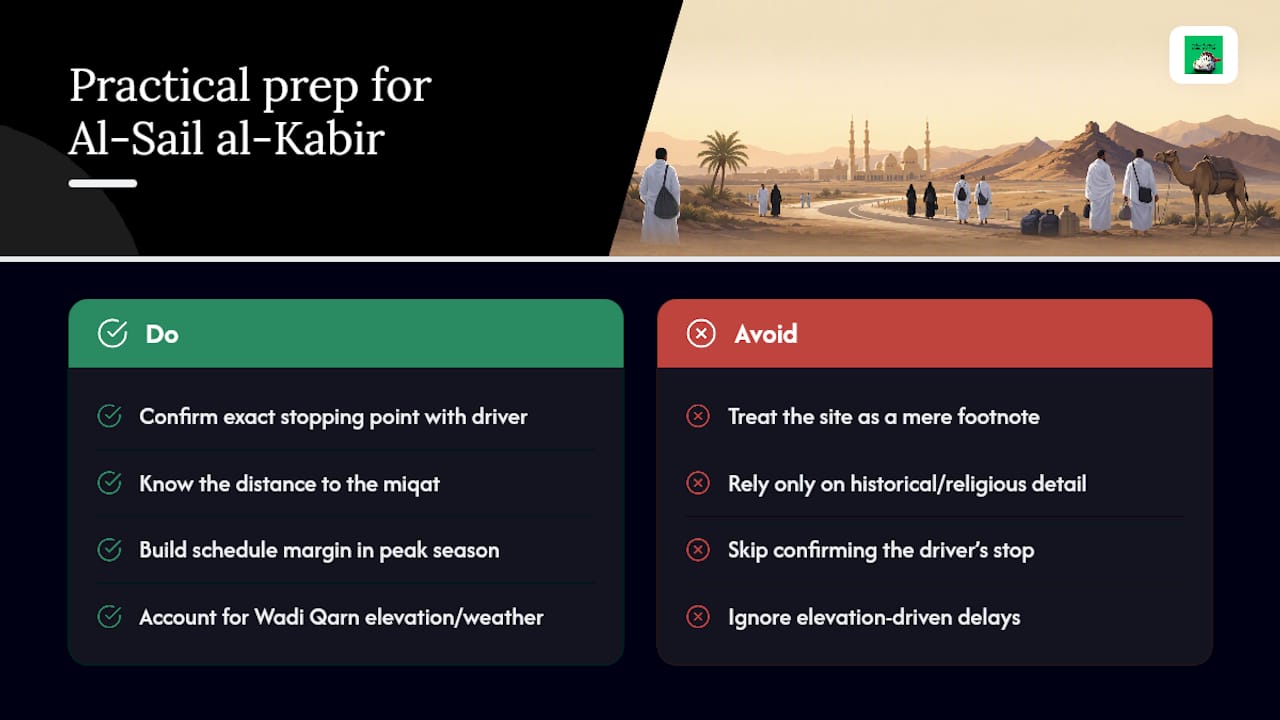
The bigger gap is practical, not historical. Pilgrims research the religious ruling extensively but underprepare for the logistics: confirming the exact stopping point with a driver, accounting for elevation-driven weather delays through Wadi Qarn, and building schedule margin during peak season. Get the ihram timing right and still lose an hour to a driver who wasn't sure where to stop.
Prioritize the boring logistics first. Know your distance, confirm your driver, and treat the historic weight of the site as context, not the only thing worth knowing before you go.
— Fa