

TL;DR:
- Integrated trip support automates data exchange across visas, transport, and accommodation to streamline Umrah journeys. Saudi Arabia's system involves over 60 agencies coordinated digitally through platforms like Nusuk and Masar Nusuk, ensuring safe, organized pilgrimages. Pilgrims should verify provider integration with official Saudi platforms to access real-time updates and seamless logistics during their pilgrimage.
Integrated trip support is a unified, digitally enabled system that coordinates every stage of travel planning and execution, from visa processing and transport booking to accommodation and ritual permits, within a single connected environment. For Umrah pilgrims traveling to Saudi Arabia, this concept is not just convenient. It is the operational backbone of a safe, organized pilgrimage. Saudi Arabia's 2026 Hajj and Umrah season demonstrates what integrated trip management looks like at scale, with platforms like Nusuk and SAPTCO's eJourney delivering coordinated trip planning solutions across millions of travelers simultaneously.
What is integrated trip support for Umrah pilgrims?
Integrated trip support is the coordination of all travel services, government permits, transport, lodging, and on-ground logistics, through automated data exchange rather than separate manual bookings. The industry term for this model is "integrated travel management," and it applies directly to the Umrah context where pilgrims must satisfy requirements from multiple Saudi government agencies before and during their journey.

The core distinction is automation. True integration means automated data flow across service components, including scheduling, transport, hotels, and permissions, rather than a bundle of separately managed services. When your visa status, hotel booking, and airport transfer all update in real time from a single source, that is integrated trip support working correctly. When you must call three different providers to confirm the same trip, it is not.
For first-time Umrah travelers, the difference is significant. A non-integrated approach places the coordination burden on the pilgrim. An integrated system places it on the platform and the agencies behind it, reducing errors, delays, and the anxiety of managing unfamiliar logistics in a foreign country.
How does integrated trip support work in Saudi Arabia's Umrah ecosystem?
Saudi Arabia has built one of the most structured pilgrimage coordination systems in the world. Over 60 government agencies operate under more than 600 work plans supervised by the Supreme Hajj Committee and the Hajj Projects Management Office. This means the integration is a governance mechanism, not just a user interface feature. Every agency, from immigration to transport authorities, operates within a shared coordination framework.
The Nusuk platform is the primary digital face of this system. Nusuk serves over 51 million users and offered more than 130 digital services during the 2026 Hajj season. That scale matters because it confirms Nusuk is not a supplementary app. It is a centralized digital window consolidating visa processing, contract management, pilgrim grouping, and crowd control via smart sensors.
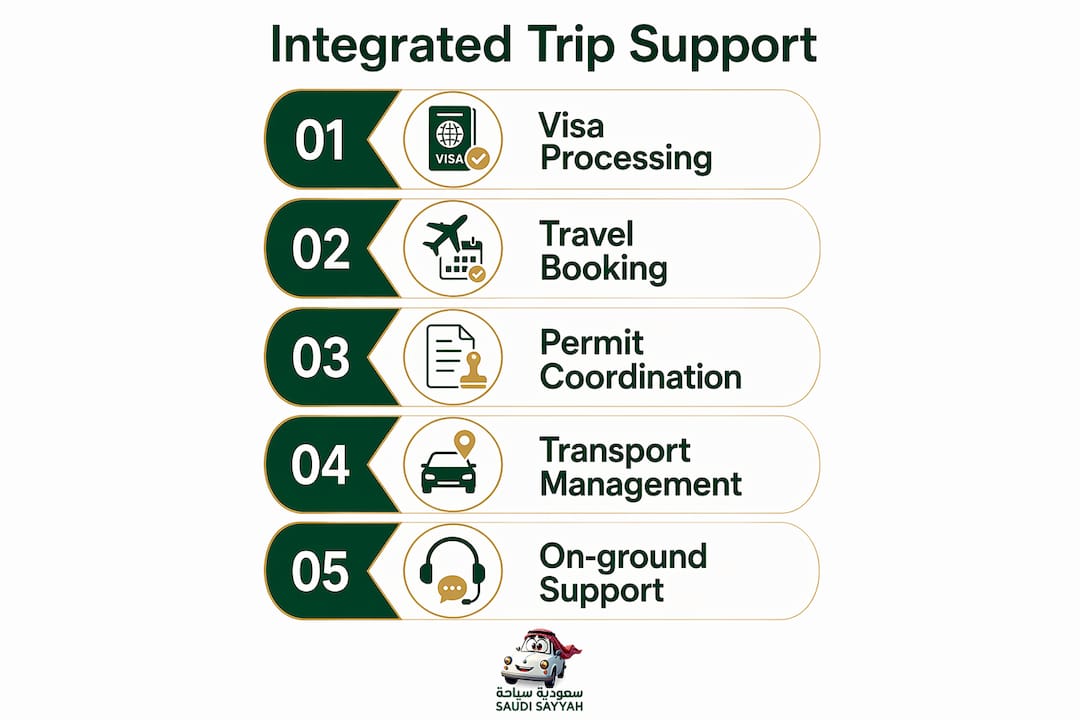
The Masar Nusuk platform takes this further by automating the pre-arrival sequence. Masar Nusuk automates visa processing, contracting, group formation, and other readiness tasks in a unified digital environment. This timeline model sequences tasks in the correct order, so pilgrims complete requirements through official channels before they arrive, rather than managing backlogs on the ground.
Key operational components of Saudi Arabia's integrated Umrah trip support system include:
- Visa and permit processing handled digitally through Nusuk before departure
- Pilgrim grouping and contracting completed in advance through Masar Nusuk
- Real-time crowd management using smart sensors at holy sites
- Transport coordination linking airport arrivals to hotel and ritual site transfers
- Multi-agency data sharing across immigration, health, transport, and religious affairs
The multi-layer ecosystem approach combining apps, operational centers, and backend digital services means support is distributed across the entire journey, not concentrated at a single customer service point.
What are the key features of integrated trip support platforms?
The most practical feature of any integrated trip support platform is a single unified interface. SAPTCO's eJourney platform consolidates transportation booking, hotel reservations, and Umrah packages into one cohesive ecosystem, eliminating the siloed systems that previously forced travelers to manage multiple providers separately. This design reduces the chance of booking conflicts and gives pilgrims a single point of reference for their entire trip.
From a technical standpoint, the defining feature is automated data exchange. When a pilgrim's visa is approved in Nusuk, that status should automatically update their transport booking and hotel check-in timeline without requiring manual re-entry. Automated data exchange between planning and operational systems reduces manual coordination errors and improves communication across providers. This is the technical standard that separates genuine integrated trip management from a simple booking bundle.
Here is what to look for in a platform that delivers real integration:
- Single login, multiple services. Transport, accommodation, and permits accessible from one account without re-entering personal data.
- Real-time status updates. Changes to one booking automatically reflect across connected services.
- Pre-arrival task sequencing. The platform guides you through visa, permit, and group registration in the correct order before departure.
- In-country journey guidance. Notifications and support covering transport to holy sites, crowd conditions, and schedule changes during the pilgrimage.
- Multi-channel support. Access via mobile app, web portal, and operational support centers, not just a phone line.
Pro Tip: Before booking any Umrah package, ask the provider directly whether your transport, hotel, and permit data are linked in a shared system or managed separately. If the answer is "we coordinate manually," that is traditional trip planning, not integrated trip support.
How does integrated trip support differ from traditional trip planning?
Traditional Umrah trip planning involves separate bookings with an airline, a hotel, a transport company, and a permit agent. Each provider holds its own data. If your flight changes, you must notify each provider individually. Errors accumulate at every handoff, and the pilgrim absorbs the coordination cost.
| Feature | Traditional trip planning | Integrated trip support |
|---|---|---|
| Booking process | Separate providers, manual coordination | Single platform, automated data sync |
| Data flow | Manual re-entry at each step | Automatic updates across all services |
| Error risk | High, due to manual handoffs | Low, due to system-level coordination |
| Crowd and safety management | Reactive, provider-by-provider | Proactive, using real-time sensors and data |
| Pilgrim effort | High, requires active management | Low, system manages sequencing and updates |
The benefits of trip integration go beyond convenience. Integrated digital support shifts from point-of-arrival help toward journey-wide guidance covering all pilgrimage stages. This means a pilgrim using a fully integrated system receives support from the moment they begin planning at home through the completion of their final ritual in Makkah or Madinah.
Safety is a direct beneficiary of this model. Real-time crowd management at holy sites, coordinated through Nusuk's sensor network, depends on accurate data about pilgrim locations and group sizes. That data only exists when transport, accommodation, and permit systems share information. Siloed systems cannot feed this kind of operational intelligence.
Pro Tip: When evaluating Umrah packages, check whether the provider uses Nusuk's official API or Masar Nusuk for permit and visa coordination. Providers connected to official Saudi digital infrastructure offer a measurably higher level of integration than those using manual permit agents.
What practical steps can Umrah pilgrims take to use trip support effectively?
Using integrated trip support well requires knowing which platforms are authoritative and how to verify that your provider is genuinely connected to them. The Umrah travel workflow follows a specific sequence, and completing steps out of order creates compliance issues that no amount of on-ground support can easily fix.
Practical steps for pilgrims planning their journey:
- Start with Nusuk. Register on the Nusuk platform before contacting any travel agent. Your Nusuk account is the official record of your visa application, group assignment, and permit status.
- Verify provider integration. Ask your travel agent or transport provider whether their booking system connects directly to Nusuk or Masar Nusuk. Providers using official digital channels complete pre-arrival requirements faster and with fewer errors.
- Use SAPTCO's eJourney for transport planning. The eJourney platform links transport bookings to Umrah packages, reducing the chance of arrival-transfer mismatches.
- Confirm airport transfer details in advance. Airport transfers for Umrah pilgrims are a critical integration point. Confirm that your transfer provider has your flight details, not just your arrival date.
- Check for real-time tracking. Providers offering geolocation-enabled tracking and driver identification before each trip give you verifiable confirmation that your transport is part of a coordinated system.
- Keep digital copies of all permits. Nusuk stores permit data digitally, but having offline copies on your phone prevents disruption if connectivity is limited near holy sites.
Pro Tip: If you are traveling as part of a group, verify that all group members are registered under the same Masar Nusuk group ID. Group formation in the system affects transport allocation and crowd management routing. Mismatched group data is one of the most common sources of on-ground delays.
For pilgrims with specific accessibility needs, accessible transport booking in Saudi Arabia requires early coordination with providers who have confirmed vehicle specifications in their system, not just verbal assurances.
Key takeaways
Integrated trip support for Umrah pilgrims is most effective when automated data flow connects visa processing, transport, accommodation, and permits through official Saudi platforms like Nusuk and Masar Nusuk.
| Point | Details |
|---|---|
| Core definition | Integrated trip support automates data exchange across all travel services in a single connected system. |
| Saudi Arabia's scale | Over 60 government agencies coordinate through 600+ work plans to manage pilgrims' journeys. |
| Nusuk's role | Nusuk serves 51 million users with 130+ digital services covering the full pilgrimage lifecycle. |
| Key differentiator | Real integration means automatic data updates across providers, not manual coordination between separate bookings. |
| Pilgrim action | Verify that your transport and accommodation providers connect directly to Nusuk or Masar Nusuk before booking. |
Why integrated trip support is more than a convenience feature
The framing of integrated trip support as a "convenience" undersells what it actually is. In the Saudi Umrah context, it is a safety and compliance infrastructure. When 51 million users move through holy sites within a concentrated season, the difference between coordinated data and siloed bookings is measured in crowd density, not just customer satisfaction scores.
What I find most significant about Saudi Arabia's 2026 approach is that integration functions as a governance mechanism rather than a product feature. The Supreme Hajj Committee does not offer integration as an optional upgrade. It is the operating standard. That distinction matters for pilgrims evaluating providers, because a provider claiming to offer "integrated" services while operating outside official Saudi digital infrastructure is using the word loosely.
The next evolution will likely involve AI-driven personalization within these systems, using pilgrim data to optimize routing, predict crowd bottlenecks, and adjust transport schedules in real time. The sensor infrastructure already exists within Nusuk's ecosystem. The question is how quickly that data gets translated into individual pilgrim guidance rather than aggregate crowd management.
The practical challenge is user education. Many first-time Umrah travelers do not know that Nusuk exists, let alone that their travel agent should be connected to it. Platforms like Masar Nusuk are only as effective as the number of pilgrims and providers using them correctly. Transparency from providers about which systems they actually use, and which they only claim to use, is the gap that needs closing before the full benefits of trip integration reach every pilgrim.
Integrated trip support could serve as a model for other large-scale religious travel destinations. The Kumbh Mela in India and the Vatican's Jubilee events face similar coordination challenges. Saudi Arabia's multi-agency digital framework, built around a centralized platform with real-time operational data, is the most advanced public example of what this looks like at scale.
— Fa
Plan your Umrah transport with Saudisayyah
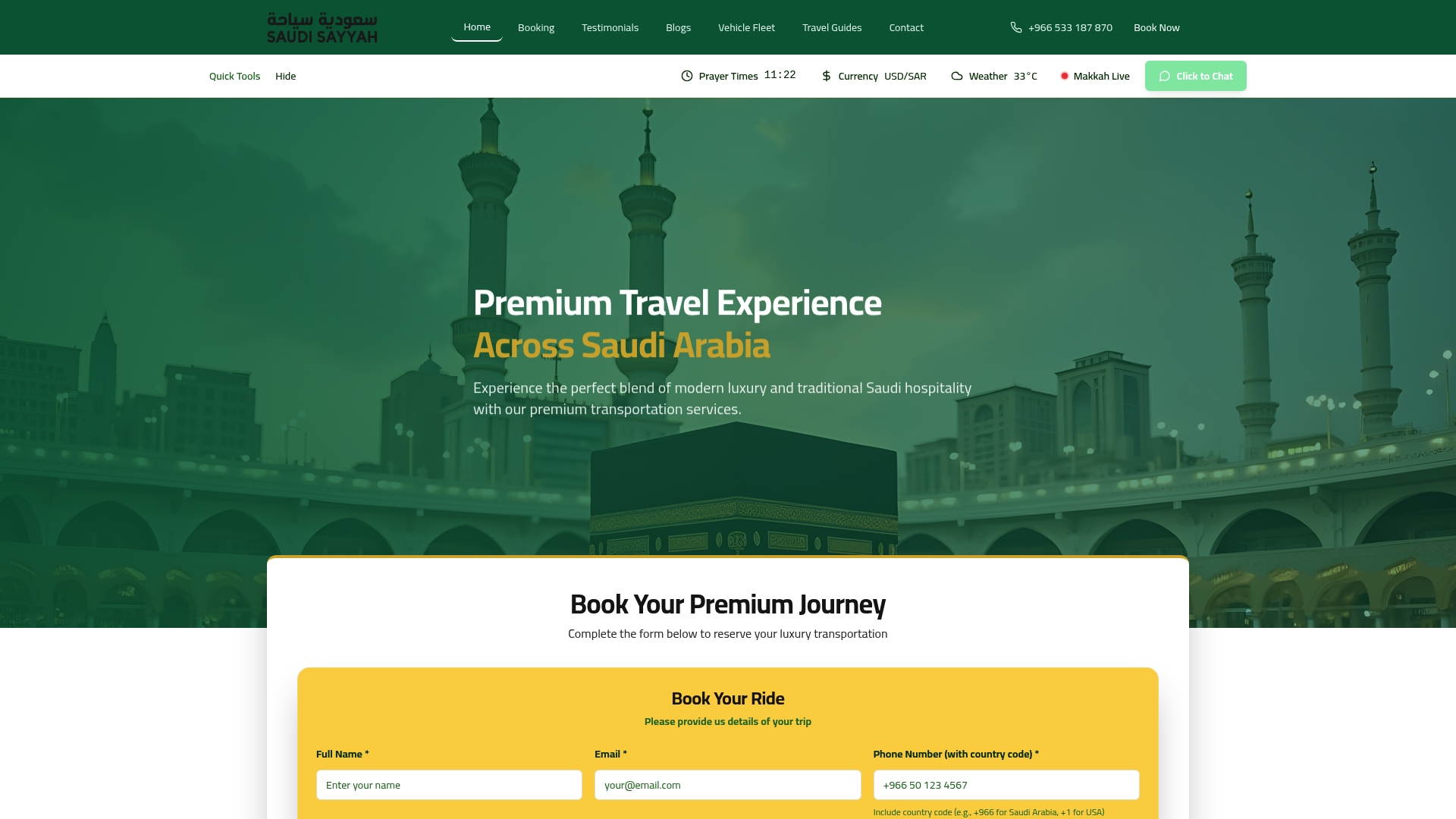
Saudisayyah operates within Saudi Arabia's integrated transport ecosystem, providing pilgrims with geolocation-enabled airport transfers, real-time driver tracking, and a fully automated booking system that connects directly to your pilgrimage schedule. Every vehicle in the Saudisayyah fleet is a current model year with verified specifications, and every booking confirms driver details and vehicle information before departure. For pilgrims who want transport that functions as part of a coordinated journey rather than a separate arrangement, explore Saudisayyah's transport services and book with the confidence that your transfer is already part of the plan.
FAQ
What is integrated trip support in simple terms?
Integrated trip support is a system where all travel services, including transport, accommodation, permits, and visas, share data automatically through a single platform rather than requiring manual coordination between separate providers.
How does Nusuk support integrated trip management for Umrah?
Nusuk serves as Saudi Arabia's central digital platform for Umrah pilgrims, consolidating visa processing, group formation, crowd management, and over 130 digital services for more than 51 million users during the 2026 Hajj season.
What is the difference between integrated and traditional trip planning?
Traditional trip planning uses separate providers with manual data handoffs at each step. Integrated trip planning uses automated data exchange so that changes to one booking update all connected services without pilgrim intervention.
How do I know if my Umrah provider offers real trip integration?
Ask whether your provider's booking system connects directly to Nusuk or Masar Nusuk. Providers using official Saudi digital infrastructure complete visa and permit coordination automatically. Providers relying on manual agents do not offer true integration.
What are the main benefits of trip integration for Umrah pilgrims?
The primary benefits include reduced coordination errors, faster pre-arrival permit completion, real-time transport and crowd updates, and a single point of reference for all pilgrimage logistics from home through ritual completion.